
By Harshit
WASHINGTON, DECEMBER 4, 2026 —
It is Friday, December 4, 2026. As Americans trade light autumn jackets for heavy winter coats, the nation’s health landscape feels unmistakably different from what it was just a few years ago. The country is no longer defined solely by the trauma of the early-2020s pandemics, but neither has it returned to a pre-crisis baseline. Instead, the United States has entered what many clinicians now describe as the era of optimization—a period where advanced technology, personalized medicine, and a strained healthcare system collide in real time.
From pharmacy counters to wrist-worn diagnostic devices, health in late 2026 is less about emergency response and more about continuous management. The tools are smarter. The expectations are higher. And the gaps—economic, mental, and environmental—are harder to ignore.
The Winter Viral Outlook: Familiar Threats, New Behavior
As families prepare for the holidays, respiratory illness is once again rising. COVID-19, influenza, and RSV are all circulating simultaneously, recreating the so-called “tripledemic.” Hospitalizations across parts of the Midwest and Northeast are tracking closely with projections issued earlier this fall by the Centers for Disease Control and Prevention.
What has changed is public behavior. Vaccine fatigue is real, but so is a growing intolerance for prolonged illness. Rather than defaulting to urgent care clinics, many Americans now rely on rapid at-home molecular tests that can distinguish between COVID-19, flu, and RSV within minutes. These results often trigger same-day telehealth visits and direct-to-pharmacy antiviral prescriptions.
Insurers report that the “treat-at-home” model has now surpassed urgent care visits for respiratory illness—an inflection point analysts predicted as early as 2024.
The Ozempic Effect Matures: Health Beyond the Scale
If 2024 was the year GLP-1 drugs captured national attention, 2026 is the year their broader consequences became unavoidable. With millions of Americans now on long-term or maintenance doses—and oral versions finally reaching pharmacies this fall—the impact extends far beyond weight loss.
Retail data shows a third consecutive quarterly decline in sales of ultra-processed snack foods. Major food manufacturers are rapidly reformulating products, marketing smaller portions with higher protein density aimed at consumers who feel full after just a few bites.
In clinical settings, the conversation has shifted as well. Cardiologists are increasingly prescribing GLP-1 medications as part of standard therapy for heart failure and metabolic disease, not just obesity. However, the financial implications are substantial. Employer-sponsored insurance premiums rose an estimated 9% this year, with analysts pointing to the long-term cost of covering GLP-1 therapies as a key driver.
The drugs are reshaping bodies—and balance sheets—at the same time.
The Doctor on Your Wrist: Edge AI Goes Mainstream
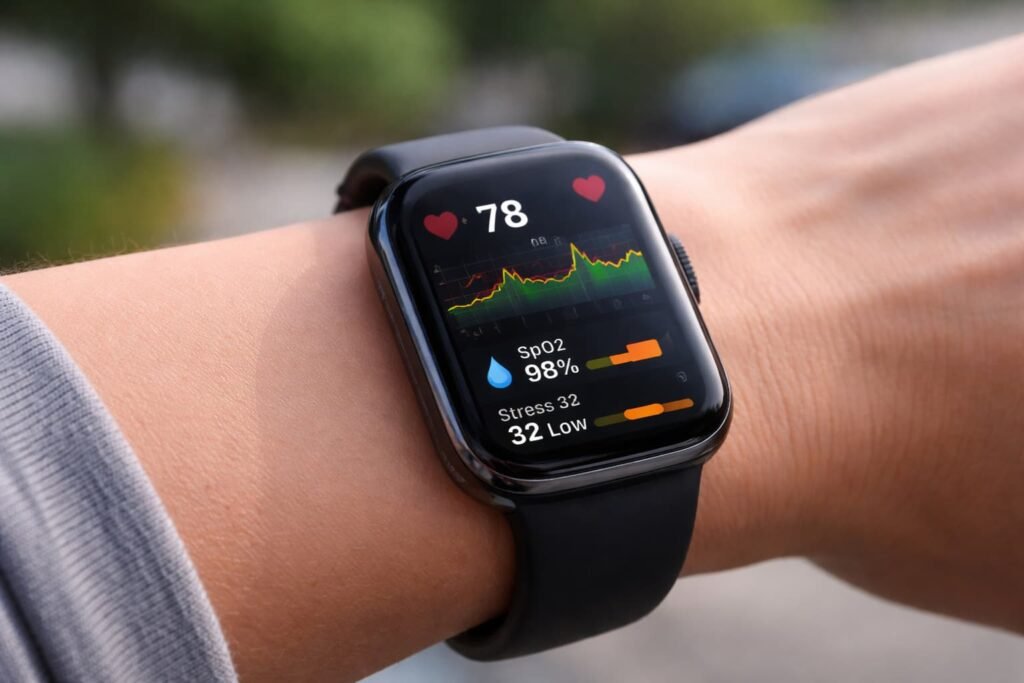
The era of the basic fitness tracker is effectively over. This holiday season’s best-selling wearables are no longer passive devices; they run diagnostic models directly on-device using edge AI, allowing real-time analysis without constant cloud uploads.
Privacy concerns pushed manufacturers to process sensitive health data locally. The result is a new generation of devices that can detect early signs of illness by tracking subtle changes in heart rate variability, skin temperature, and sleep patterns. Some models claim to predict flu onset with accuracy approaching 85%.
“We’re seeing patients come in because their watch flagged an arrhythmia,” said a cardiologist affiliated with the Mayo Clinic. “Three years ago, we would have been skeptical. Today, the device is usually right.”
For clinicians, this has changed triage itself. Data now often arrives before the patient does.
Mental Health in an Always-On World
Despite technological progress, mental health remains the most unresolved crisis of 2026. What began as pandemic-era anxiety has evolved into what public health experts increasingly call a loneliness epidemic.
Remote and hybrid work have persisted, offering flexibility while quietly eroding daily social interaction. In response, corporations have expanded mental health benefits far beyond traditional employee assistance programs.
Today’s standard offering includes AI-integrated mental health platforms providing 24/7 “micro-coaching,” mood tracking, and cognitive behavioral prompts. These tools help fill gaps created by a nationwide shortage of therapists, but critics question whether empathy can truly be automated—or if constant monitoring risks further emotional detachment.
The data shows modest engagement improvements, but no meaningful decline in youth anxiety or depression rates.
The Climate Hangover: Health After the Heat
Health in late 2026 cannot be separated from the environment. After a summer marked by record-breaking heat waves, the aftershocks are still being felt in clinics across the country.
Vector-borne diseases such as babesiosis and Lyme disease are appearing later into the year, particularly in the Northeast and Upper Midwest, as colder temperatures arrive weeks later than historical norms. Pediatricians also report a spike in asthma diagnoses this fall, a delayed effect of prolonged poor air quality during wildfire season.
In primary care offices, the phrase “climate cough” has entered everyday vocabulary—a shorthand for lingering respiratory symptoms tied to heat, smoke, and pollution rather than infection.
Environmental health has moved from a niche specialty to a frontline concern.
A System Under Pressure, A Public Still Adapting
As 2026 draws to a close, American healthcare reflects a paradox. The country has unprecedented tools: predictive diagnostics, metabolic therapies, and telemedicine infrastructure that would have been unimaginable a decade ago. Yet life expectancy has improved only marginally, and disparities in access remain stark.
The challenge for 2027 is not innovation, but integration. Data from wearables, breakthroughs in pharmaceuticals, and flexible care delivery must be woven into a cohesive safety net rather than existing as parallel systems accessible mainly to the insured and tech-savvy.
Health Indicator Dashboard — December 4, 2026
- Flu & COVID Activity: Moderate to high, rising seasonally
- Obesity Rate: 39.5%, first sustained decline in decades, largely attributed to GLP-1 use
- Uninsured Rate: 8.2%, largely unchanged
- Telehealth Utilization: 45% of primary care encounters, up from 38% in 2025
- Youth Mental Health: Critical, with no significant improvement year-over-year
Looking Ahead
The American health story at the end of 2026 is one of fragile resilience. The nation can predict illness earlier than ever and treat chronic disease more effectively, yet struggles to convert these advances into broad-based well-being.
Optimization has arrived. Whether it becomes a public good—or remains a personalized privilege—will define the next chapter.