
By Harshit
NEW YORK, 30 dec, 2025 —
For much of the past decade, science advanced in promises. Quantum computing would someday transform chemistry. Gene editing would eventually cure inherited disease. Humanity would return to the Moon—again—at some unspecified point in the future.
In 2026, that era ends.
Across space agencies, biomedical labs, energy companies, and advanced manufacturing plants, science is crossing a critical threshold: deployment. This is the year when theories harden into infrastructure, and prototypes become systems that must work reliably in the real world. Engineers increasingly refer to this shift as “hard tech”—technology that reshapes physical reality rather than digital interfaces.
From permanent lunar operations to solid-state energy storage, from AI-designed biology to planet-hunting observatories, four scientific frontiers define 2026 as a turning point rather than another incremental year of progress.
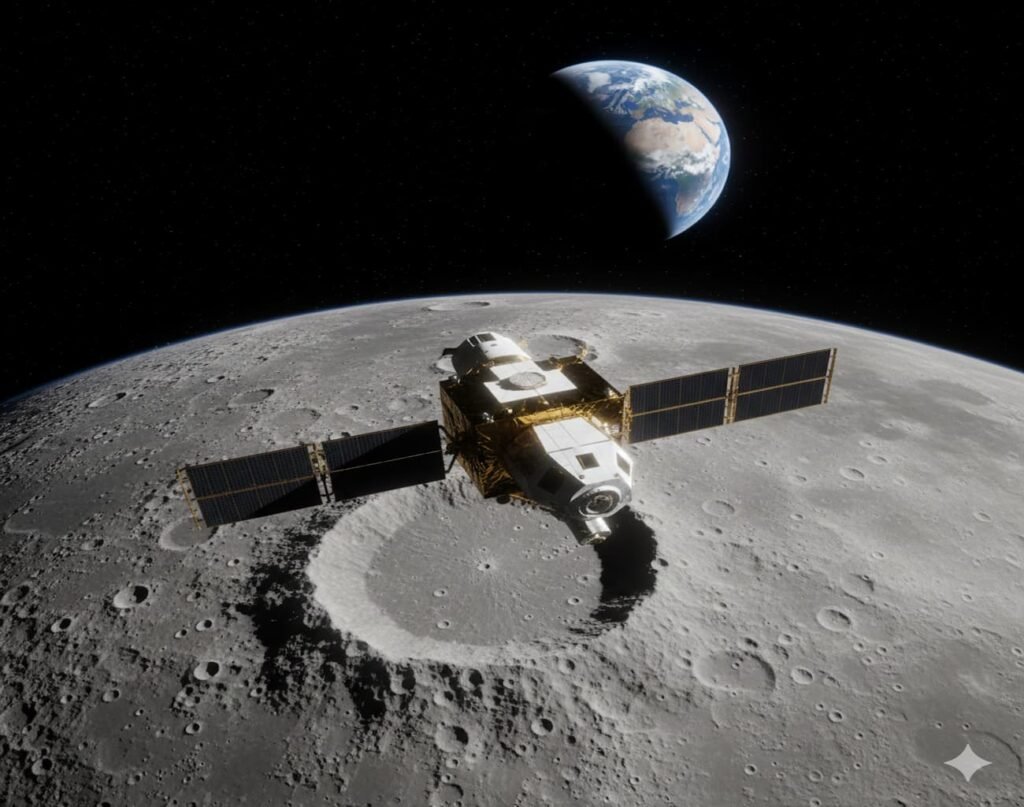
I. The Moon Becomes an Operating Zone, Not a Destination
The Moon is no longer a symbol. In 2026, it becomes a logistical environment.
Unlike the Apollo missions—short visits driven by geopolitics—the current lunar push is defined by permanence. The United States, through NASA, and its international partners are building systems meant to endure years, not days.
Artemis II and the South Pole Strategy
The upcoming Artemis II mission, which will carry four astronauts on a crewed lunar flyby, serves as the final systems validation before surface operations resume. Its successor, Artemis III, aims to land astronauts near the Moon’s south polar region—an area of intense interest due to permanently shadowed craters that likely contain water ice.
Water is not merely symbolic. Ice can be converted into drinking water, breathable oxygen, and rocket fuel. That makes it the single most valuable resource for sustained lunar presence.
Robots First, Humans Second
Before astronauts arrive, robotic missions are already transforming lunar exploration into a data-driven industrial process. Precision mapping of subsurface ice, terrain stability, and radiation exposure is underway, feeding into long-term habitat planning.
Meanwhile, China’s lunar program is advancing in parallel. Chang’e 7, expected to launch later this year, will deploy multiple robotic elements—including a hopping probe designed to enter permanently shadowed regions. The mission signals that lunar activity is no longer unilateral; it is geopolitical, strategic, and permanent.
The Cislunar Economy Emerges
In orbit and on the surface, a new commercial layer is forming. Private companies, operating under government contracts, are now delivering payloads to the Moon with increasing regularity. Cargo delivery, terrain vehicles, and surface power systems are replacing one-off science experiments.
The Moon in 2026 is not being explored. It is being provisioned.
II. Energy Breaks Free from Lithium’s Limits
Energy storage has long constrained technological progress. In 2026, that bottleneck begins to loosen.
Solid-State Batteries Enter the Market
For decades, lithium-ion batteries powered everything from smartphones to electric vehicles. Their limitations—flammability, degradation, and energy density ceilings—have been equally well known.
Solid-state batteries replace liquid electrolytes with solid materials, dramatically improving safety and energy density. What changed recently was not chemistry, but manufacturing.
In 2026, limited commercial deployment begins. Early vehicles equipped with solid or semi-solid batteries are achieving energy densities exceeding 400 watt-hours per kilogram, pushing real-world driving ranges beyond 1,000 kilometers on a single charge.
The implications are structural. Long-distance electric transport, aviation electrification, and resilient grid storage all become more plausible—not in theory, but in production.
Solar Power Gets a Structural Upgrade
At the same time, solar energy is experiencing its own inflection point. Tandem solar cells—combining traditional silicon with perovskite layers—are surpassing efficiency limits once considered fundamental.
Commercial panels approaching 30% efficiency are entering the market in 2026, increasing power output without expanding land use. For urban grids and residential rooftops, this efficiency jump translates directly into economic viability.
Energy, in short, is becoming denser, safer, and more deployable at scale.
III. Biology Shifts from Discovery to Design
Perhaps the most profound changes of 2026 are unfolding quietly inside laboratories, where biology is no longer being observed—it is being engineered.
AI-Designed Proteins and Medicines
Advances in machine learning have allowed algorithms to predict protein folding with near-experimental accuracy. In 2026, those same tools are being used to design entirely new proteins—enzymes and therapeutics that do not exist in nature.
Drug development, once defined by trial and error, is increasingly guided by computational design. Molecules are created to specification, tested in simulations, and refined before entering physical trials.
Digital Twins Enter Clinical Research
Regulatory agencies, including the U.S. Food and Drug Administration, are cautiously integrating “in silico” testing into early drug development. Virtual physiological models—digital twins of human systems—are being used to predict toxicity and efficacy before animal or human exposure.
This approach reduces failure rates, lowers costs, and shortens development timelines. While not a replacement for clinical trials, it represents a structural shift in how medicine is evaluated.
A Breakthrough in Pain Treatment
One of the most tangible biomedical impacts of 2026 is the rollout of non-opioid pain medications targeting NaV1.8 sodium channels. These drugs block pain signals at peripheral nerves without affecting the brain’s reward system.
The result is effective pain relief without addiction, sedation, or respiratory suppression—a fundamental departure from opioid pharmacology that could reshape post-surgical care and trauma medicine.
IV. Searching for Earth-Like Worlds Beyond the Solar System
While applied science dominates headlines, fundamental discovery continues.
In late 2026, the European Space Agency will launch PLATO, a next-generation planet-hunting observatory designed to answer one of humanity’s oldest questions: How common are Earth-like planets?
Why PLATO Matters
Unlike earlier missions that surveyed narrow regions or short time spans, PLATO will monitor large areas of the sky continuously for years. This duration is essential for detecting planets with Earth-like orbits around sun-like stars.
By combining planetary detection with stellar seismology, PLATO will not only find planets—it will characterize their environments with unprecedented precision.
The mission’s findings will guide future telescopes tasked with analyzing planetary atmospheres for signs of water, oxygen, and potential biological activity.
V. Computing Enters the Physical Domain
As traditional semiconductor scaling slows, computing is diversifying rather than stagnating.
Optical and Physics-Native Computing
In 2026, hybrid computing systems that use light rather than electrons are transitioning from research demonstrations to specialized deployment. Optical processors solve certain classes of equations by allowing physical processes—light interference and propagation—to compute results directly.
These systems are particularly valuable for climate modeling, fluid dynamics, and real-time optimization problems where conventional digital computation is energy-intensive.
Rather than replacing classical computers, they complement them—forming heterogeneous systems tuned to specific tasks.
Conclusion: Science Becomes an Integrated System
What defines 2026 is not any single breakthrough, but convergence.
AI accelerates biological design.
Advanced materials enable better energy storage.
Those batteries power lunar vehicles.
Optical computers model their trajectories.
The boundaries between disciplines are dissolving. Science is no longer segmented into silos—it is becoming a unified system for solving physical problems at planetary scale.
For the public, the defining question of 2026 is no longer what science might do someday, but how society adapts to what science has already begun to deliver.