
By Harshit
COLORADO, DECEMBER 29 —
The United States may not need to open dozens of new mines to secure the materials essential for clean energy, advanced electronics, and national defense. According to a new study published today in Science, many of the country’s critical mineral needs could be met by recovering valuable byproducts already present in active U.S. metal mines—but currently discarded as waste.
The research, led by Elizabeth Holley and colleagues, shows that minerals vital to modern technology are routinely separated out and left unused during the extraction of metals such as copper, gold, zinc, nickel, and molybdenum. Even modest improvements in recovery could dramatically reduce U.S. reliance on foreign imports.
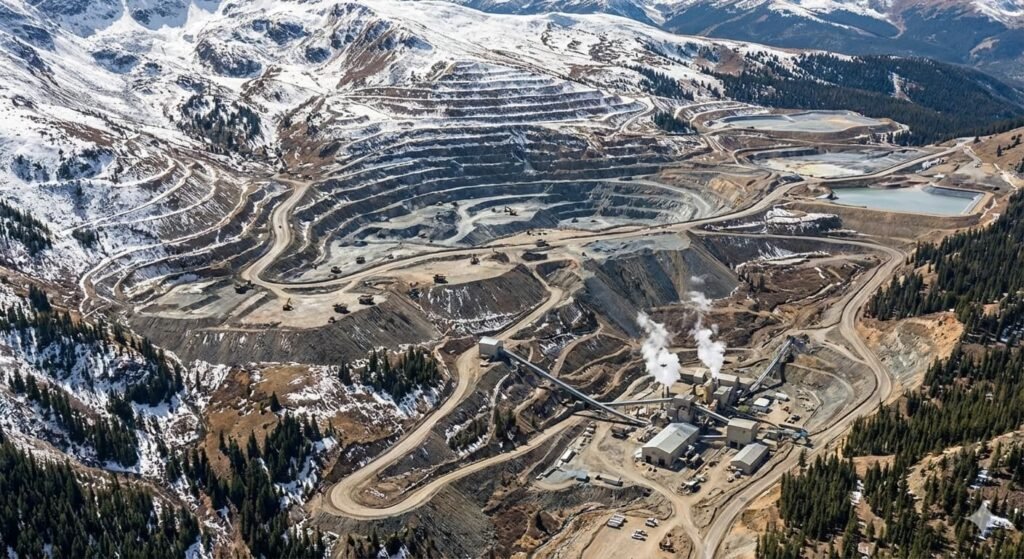
One of the mining operations evaluated in the analysis was Climax Mine, a high-altitude operation in Colorado that produces roughly 30 million pounds of molybdenum each year and is affiliated with research at the Colorado School of Mines.
Critical Minerals: Essential, Scarce, and Strategically Risky
Critical minerals are defined as materials that are vital to economic and national security but face supply risks due to limited domestic production or geopolitical instability. In the U.S., the list includes cobalt, lithium, nickel, manganese, tellurium, germanium, gallium, rare earth elements, and others.
These materials are foundational to:
- Electric vehicle and grid-scale batteries
- Wind turbine and electric motor magnets
- Semiconductors and advanced electronics
- Solar panels and clean energy infrastructure
- Defense, aerospace, and medical technologies
As demand accelerates with the energy transition, the U.S. remains heavily dependent on imports—often from regions subject to political tension, trade restrictions, or supply disruptions. Opening new mines can take 10 to 20 years, making faster alternatives especially valuable.
The Overlooked Resource: Byproducts in Existing Mines
Critical mineral byproducts are elements that naturally occur alongside primary metals in ore deposits. Because mining operations are optimized to extract their main commodity, these secondary minerals are typically removed during processing and discarded into tailings.
Holley’s team set out to quantify just how much value is being left behind.
By combining:
- Federal data on production from permitted U.S. metal mines, and
- A nationwide geochemical database measuring concentrations of 70 critical minerals in ore samples,
the researchers estimated how much of each critical mineral is already being mined—but not recovered.
The result was striking.
Small Recovery Rates, Massive Impact
The study found that:
- Recovering 90% of critical mineral byproducts could meet nearly all U.S. demand for many elements.
- Even a 1% recovery rate would substantially reduce import reliance for most critical minerals analyzed.
In several cases, the researchers estimated that recovering less than 10% of byproducts would generate greater total economic value than the primary metals currently sold by U.S. mines.
In other words, what is treated as waste today could rival—or exceed—the value of the metals driving the mining operations themselves.
Economic and Strategic Advantages
Recovering critical mineral byproducts could deliver multiple benefits at once:
1. Supply Chain Security
Domestic recovery would reduce dependence on foreign suppliers, strengthening resilience for industries tied to energy, technology, and defense.
2. Faster Than New Mines
Because the material is already being excavated, byproduct recovery avoids many of the permitting delays, land-use conflicts, and infrastructure costs associated with opening new mines.
3. Economic Upside
New revenue streams could improve mine profitability, support domestic manufacturing, and create specialized processing jobs.
Environmental Benefits and Waste Reduction
The environmental implications are equally significant. Mine tailings must be stored and monitored indefinitely to prevent contamination of soil and water. Recovering valuable minerals before disposal could:
- Reduce the volume and long-term risk of mine waste
- Lower the environmental footprint per unit of extracted material
- Enable secondary uses of processed materials in construction and infrastructure
This approach aligns with broader goals of resource efficiency and circular economy practices.
The Remaining Challenges
Despite the promise, the authors caution that recovery is not automatic. Critical mineral byproducts often occur in low concentrations and are embedded in complex chemical mixtures.
Key hurdles include:
- Developing cost-effective separation and processing technologies
- Retrofitting existing mills and refineries
- Creating policy incentives that reward byproduct recovery
- Ensuring environmental safeguards remain robust
As Holley and her colleagues note, the challenge is not geological availability—but making recovery technically and economically practical at scale.
A Strategic Opportunity Already in Hand
The study’s central conclusion is clear: the United States is already handling much of the material it needs for the clean energy transition and advanced manufacturing. The minerals are not missing—they are being thrown away.
With targeted investment in technology, research, and policy support, U.S. mines could transform overlooked byproducts into a strategic domestic resource, reducing import dependence while strengthening economic and environmental outcomes.