
By Harshit
WASHINGTON, Dec. 20 — 8 AM EDT
Operation Hawkeye Strike Targets IS Strongholds
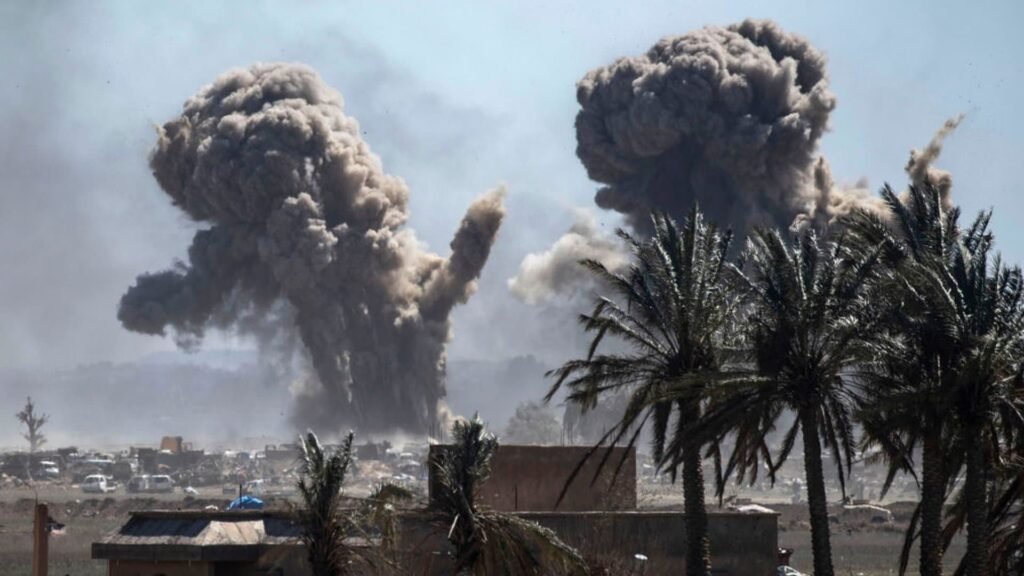
The United States says its military has carried out a “massive strike” against Islamic State (IS) targets in Syria, launching a large-scale aerial and artillery assault in response to a deadly ambush that killed two American soldiers and a civilian interpreter earlier this month.
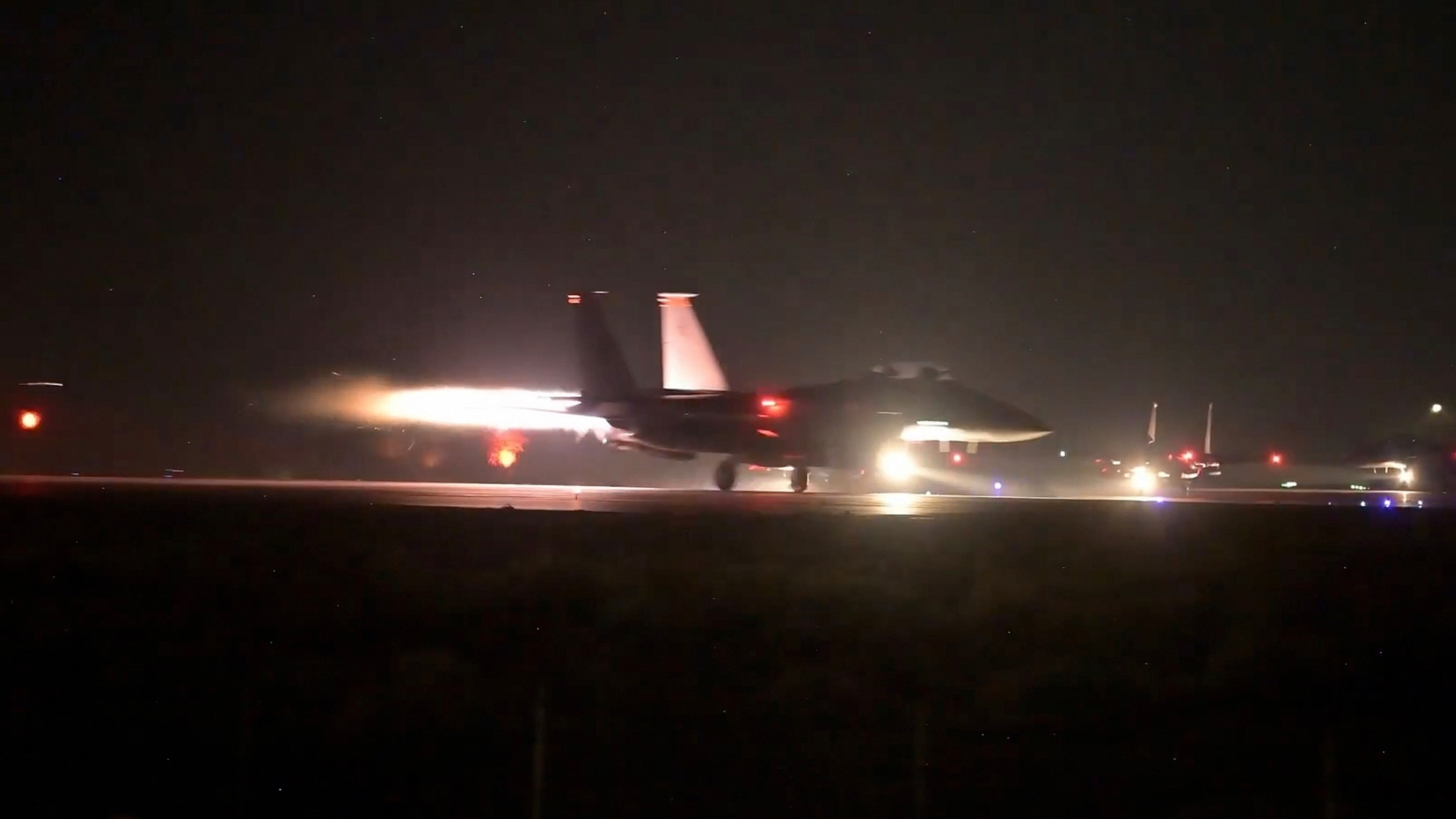
According to US Central Command (CENTCOM), the operation — dubbed Operation Hawkeye Strike — began at 4:00 p.m. Eastern Time on Friday and struck more than 70 targets across central Syria. The assault involved fighter jets, attack helicopters, artillery units, and aircraft operating in coordination with Jordanian forces.
CENTCOM said the mission employed over 100 precision-guided munitions, targeting what it described as known IS infrastructure, command nodes, and weapons storage sites.
Strike Follows Deadly Palmyra Attack
The military operation follows a December 13 ambush in the Syrian city of Palmyra, where two U.S. soldiers and a U.S. civilian interpreter were killed during an attack on American forces.
President Donald Trump said the strike was a direct response to that assault, pledging forceful retaliation against IS.
“We are striking very strongly against ISIS strongholds,” Trump said. “This is very serious retaliation, just as I promised.”
The U.S. Army later identified the fallen soldiers as Sgt. Edgar Brian Torres Tovar, 25, and Sgt. William Nathaniel Howard, 29. Three additional U.S. troops were wounded in the ambush.
CENTCOM: ‘Relentless Pursuit of Terrorists’
CENTCOM commander Admiral Brad Cooper said the strike sends a clear message to extremist groups operating in the region.
“We will continue to relentlessly pursue terrorists who seek to harm Americans and our partners across the region,” Cooper said in a statement.
The Pentagon has said the ambush occurred in an area not under the control of the Syrian government, complicating accountability for the initial attack.
Conflicting Accounts of the Attacker
CENTCOM previously stated that the Palmyra attack was carried out by an IS gunman, who was later engaged and killed by U.S. forces.
However, Syrian Observatory for Human Rights (SOHR) offered a conflicting account, claiming the attacker was a member of Syrian security forces. No group has formally claimed responsibility for the ambush, and the identity of the assailant has not been publicly released.
Rami Abdel Rahman, head of the SOHR, told AFP that at least five IS fighters were killed during the U.S. strikes, including a senior operative responsible for drone activity in eastern Syria’s Deir ez-Zor province.
Pentagon: ‘Not a War, a Warning’
U.S. Defense Secretary Pete Hegseth framed the operation as a targeted response rather than a broader escalation.
“This is not the beginning of a war — it is a declaration of vengeance,” Hegseth said.
“If you target Americans anywhere in the world, you will spend the rest of your brief, anxious life knowing the United States will hunt you, find you, and ruthlessly kill you.”
He added that American forces “hunted and killed” IS militants during the operation and would continue doing so if threats persist.

Islamic State Still Active Despite Territorial Defeat
Although IS lost the last territory it controlled in Syria in 2019, the group has continued to carry out insurgent-style attacks, particularly in remote desert regions.
The United Nations estimates that IS still maintains between 5,000 and 7,000 fighters across Syria and Iraq, operating through sleeper cells and mobile units.
U.S. troops have maintained a presence in Syria since 2015, primarily to support local partners and prevent the resurgence of the extremist group.
Syria’s Role and Regional Implications
Trump said the Syrian government was “fully in support” of the U.S. operation, a notable claim given the complicated history between Washington and Damascus.
Syria recently joined an international coalition to combat IS and has pledged greater cooperation with U.S. counterterrorism efforts. In November, Syrian President Ahmed al-Sharaa met Trump at the White House following the collapse of Bashar al-Assad’s regime in 2024, describing the meeting as the start of a “new era” in bilateral relations.
Analysts say the strike underscores Washington’s intent to prevent IS from exploiting political transitions and security gaps in post-war Syria.
What Comes Next
IS has not publicly commented on the strikes, and independent verification of all targets remains limited. CENTCOM said it is assessing battle damage and monitoring potential retaliatory threats.
For now, U.S. officials insist the operation was limited, proportional, and defensive, aimed solely at degrading IS capabilities and deterring future attacks on American personnel.