
By Harshit
NEW YORK, DECEMBER 18 —
A coalition of international human rights organizations is calling on the National Basketball Association (NBA) to sever its sponsorship ties with Emirates airline, arguing that the league’s in-season tournament partnership enables what critics describe as “sportswashing” by the United Arab Emirates (UAE).
The campaign, led by Refugees International and co-sponsored by 14 advocacy groups under the banner Speak Out On Sudan, accuses the NBA of lending global legitimacy to a government facing allegations of complicity in Sudan’s devastating civil war. The groups have petitioned the league to drop Emirates — a government-owned airline — as the title sponsor of the Emirates NBA Cup.
“The NBA is letting itself be used as a pawn to distract people from what the UAE is doing in the world,” the petition states. “This partnership is not innocent — it is sportswashing, and it hides the suffering of millions of Sudanese people behind a trophy.”
Sportswashing Allegations Surround NBA Partnership
Sportswashing refers to the use of high-profile sporting events or sponsorships to improve the public image of governments or organizations accused of human rights abuses. The term gained prominence in the mid-2010s amid growing scrutiny of authoritarian states investing heavily in global sports.
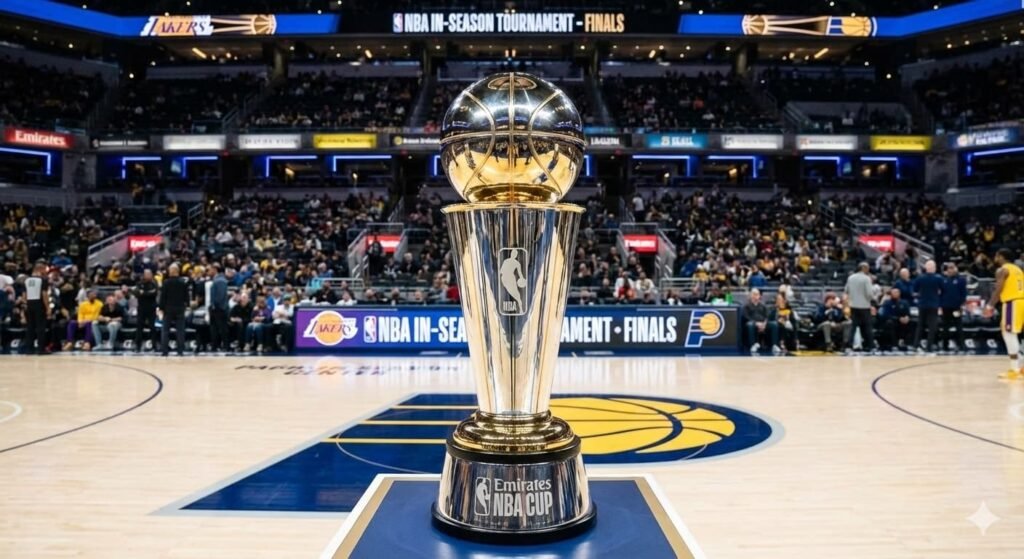
The NBA introduced its in-season tournament in 2023 to inject urgency and competitiveness into the early months of its 82-game schedule. While the inaugural tournament ran without a naming sponsor, the league partnered with Emirates for the subsequent two editions, rebranding the competition as the Emirates NBA Cup.
Critics argue the partnership allows the UAE to project a modern, progressive image through association with one of the world’s most influential sports leagues, even as it faces international scrutiny over its alleged role in Sudan.
Sudan Conflict at Center of Controversy
Sudan has been engulfed in civil war for nearly three years, with fighting between the Sudanese Armed Forces (SAF) and the paramilitary Rapid Support Forces (RSF). The conflict has displaced millions and triggered widespread humanitarian crises.
In January, the United States accused the RSF of committing genocide. Sudan’s acting justice minister later alleged at the International Court of Justice that the RSF operates with “the support and complicity” of the UAE — claims the Emirati government has repeatedly and forcefully denied.
Although the UAE has rejected accusations of providing weapons or logistical assistance to the RSF, a United Nations Security Council-appointed expert panel previously described those allegations as “credible.” Senior members of the U.S. Senate Foreign Relations Committee have also argued that foreign backers, including the UAE, have fueled the conflict.
UAE Denials and NBA Response
The UAE maintains it has no role in Sudan’s war and emphasizes its humanitarian contributions, stating it is the second-largest aid donor to Sudan after the United States. In response to CNN inquiries, the UAE foreign ministry condemned attacks on civilians and called for accountability among all warring parties.
NBA spokesman Mike Bass defended the league’s international partnerships, stating that the NBA’s activities in the UAE align with its global mission.
“Basketball has a century-long history in the Middle East,” Bass said, noting the league’s youth programs and live events across the region. He added that the NBA relies on U.S. State Department guidance in all countries where it operates.
Emirates airline declined to comment on the petition.
Pressure Mounts Ahead of NBA Cup Final
The timing of the renewed push coincides with the Emirates NBA Cup final, scheduled for Tuesday night in Las Vegas between the New York Knicks and the San Antonio Spurs.
Jeremy Konyndyk, president of Refugees International, described the UAE’s global posture as contradictory.
“They invest heavily in projecting a vibrant, modern brand — sponsoring sports, concerts, and cultural events,” he said. “At the same time, they are enabling and fueling mass atrocities in Sudan.”
Advocacy groups first raised concerns with the NBA in 2024, writing directly to Commissioner Adam Silver and Deputy Commissioner Mark Tatum. In response, Tatum stated the partnership was consistent with the league’s mission to connect people worldwide through basketball.
With no change in policy since then, activists say they are now appealing directly to fans and players.
“We’re turning to the court of public opinion,” said Mutasim Ali, a Darfur genocide survivor and legal advisor at the Raoul Wallenberg Center for Human Rights. “The players should be concerned. The fans should be concerned.”