
By Harshit
ABU DHABI — DEC 7, 8:23 AM EDT
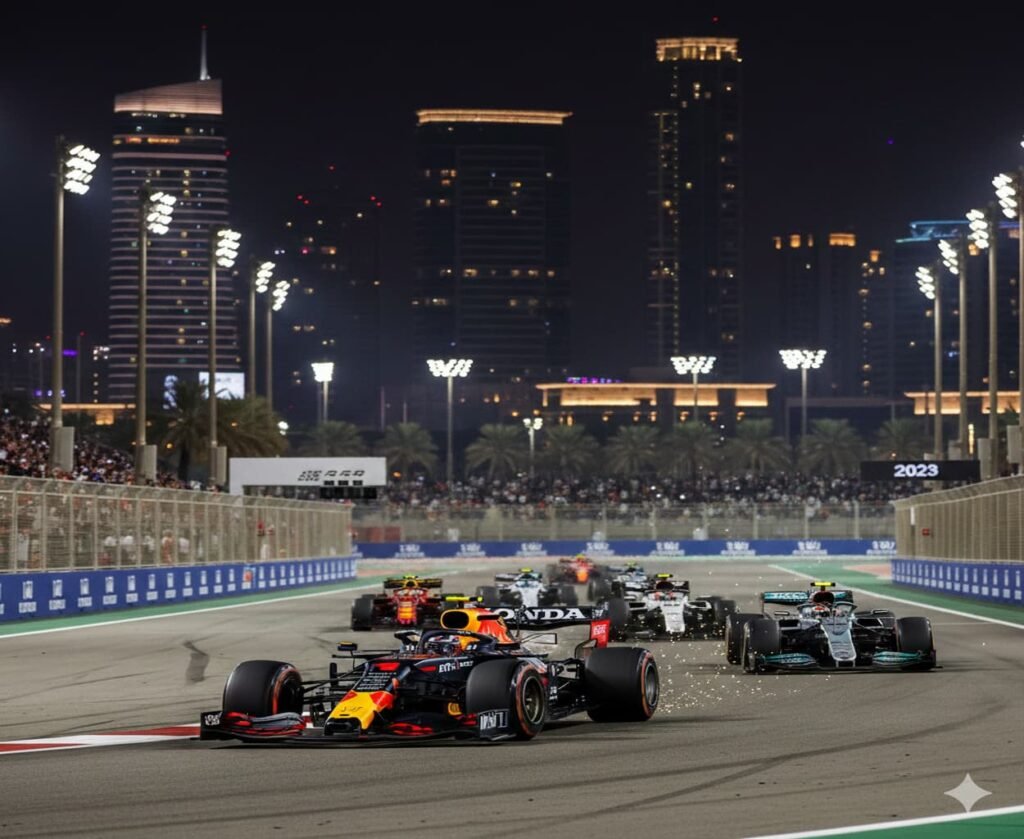
The tension inside the Yas Marina Circuit intensified early as the 2025 Formula One championship battle began to take shape under desert skies. With Max Verstappen controlling the race from the front and McLaren teammates Oscar Piastri and Lando Norris running directly behind him, strategy — not just speed — quickly became the defining theme of the afternoon.
Verstappen set a relentless early pace, opening a gap of more than two seconds within the first 10 laps. While the Red Bull driver appeared comfortable up front, the real drama was unfolding behind him, where McLaren found itself managing a delicate internal balance with championship implications hanging in the air.
McLaren Orders Piastri to Push
McLaren made its intentions clear over team radio when Piastri was encouraged to increase the pace. The goal wasn’t merely to chase Verstappen but to disrupt the airflow behind Norris. Engineers believed that even a small aerodynamic disadvantage could compromise tyre performance for the car following too closely — a detail that can decide races under modern ground-effect regulations.
Piastri responded by pulling clear of Norris and solidifying second place, running on hard tyres while Norris remained on the medium compound. The differing strategies put Norris in a vulnerable position, particularly as Ferrari’s Charles Leclerc loomed large in his mirrors.
Leclerc Applies Relentless Pressure
Leclerc quickly became a major factor in the championship equation. The Ferrari driver locked himself into Norris’ DRS window, repeatedly threatening a move for third place. Damon Hill, offering analysis during the race, noted that Norris was facing a genuine problem.
A drop to fourth would swing momentum decisively toward Verstappen if the Red Bull driver went on to win. Norris, however, leaned into one of his strengths — tyre management — resisting the urge to push too early and preserving performance for later stints.
Verstappen Controls the Front
While speculation swirled around possible tyre graining for Verstappen, his lap times told a different story. Red Bull’s race pace remained strong, with Verstappen steadily extending his advantage over the McLaren pair.
Radio messages indicated Red Bull was considering a longer opening stint, signaling confidence in tyre life and race balance. Verstappen’s calm execution reinforced why he remains the benchmark under pressure, particularly in championship-deciding races.
Strategic Divergence in the Midfield
Pit strategies began to split the field by Lap 9 as Lewis Hamilton, Alex Albon, and Nico Hülkenberg opted for early switches to hard tyres. The contrasting approaches suggested teams were already committing to long-range race plans rather than reacting lap by lap.
Fernando Alonso enjoyed a sharp start, briefly gaining positions before George Russell reclaimed fifth with a decisive overtake. The midfield battles, though fierce, paled in comparison to the title drama unfolding at the front.
Norris Holds the Key
At Lap 10, Norris remained third — the position that would secure him the world championship if the order stayed intact. Verstappen led Piastri by over two seconds, with Norris hovering just under four seconds behind the leader.
McLaren’s internal strategy was clear: Piastri was tasked with pressuring Verstappen while creating enough separation to prevent Norris from being dragged into aerodynamic turbulence. The execution, however, left Norris exposed to Ferrari’s relentless pursuit.
Despite the pressure, Norris appeared composed. His tyre management remained measured, his defensive positioning disciplined. Engineers continued to check in via radio, ensuring he was comfortable with the evolving situation as the race settled into its rhythm.
With nearly fifty laps remaining, nothing was guaranteed — but the early stages had already confirmed that this championship would be decided not by outright dominance, but by precision, strategy, and nerve.