
By Harshit
GAZA CITY, Dec. 4 —
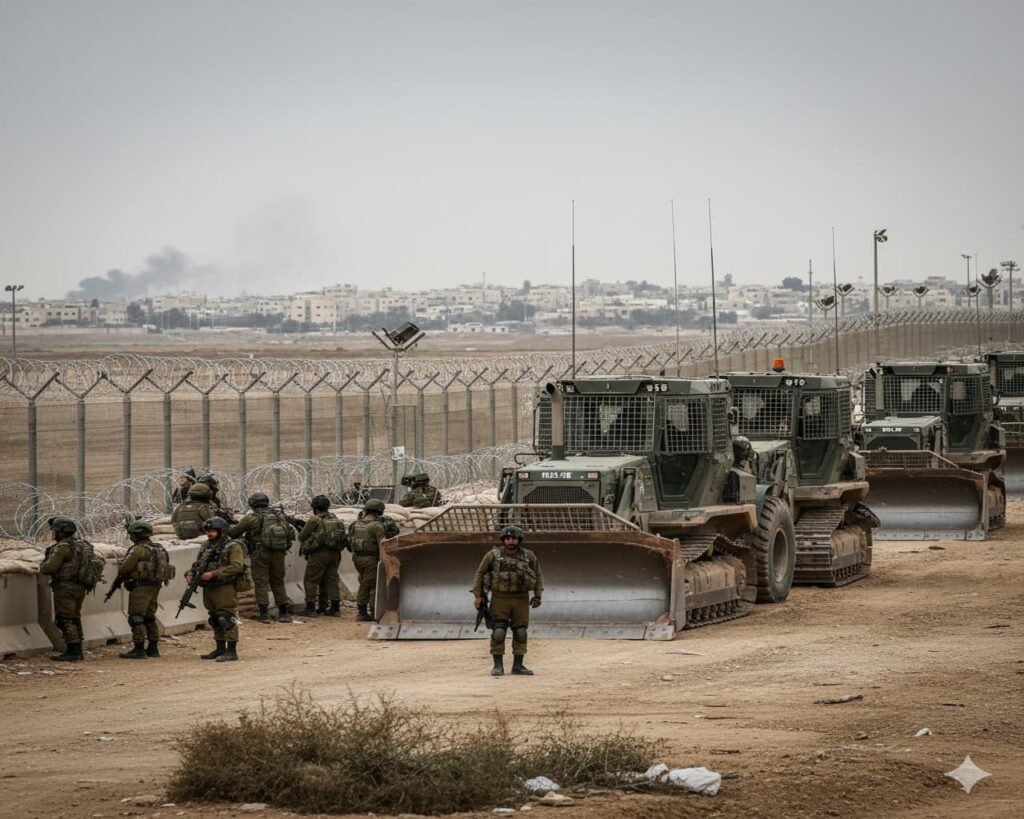
Israel’s military killed seven Palestinians, including two children, in new strikes across the Gaza Strip on Wednesday, even as it announced that the Rafah crossing would reopen solely for Palestinians seeking to exit the besieged territory. The unilateral move, which Israel framed as a humanitarian step, immediately sparked political and diplomatic disputes, with the United Nations and Egypt warning that a one-way corridor fails to meet the needs of a population facing catastrophic conditions.
From Gaza City, Al Jazeera correspondent Hani Mahmoud said the latest killings demonstrate that “the genocide never really ended,” despite a ceasefire that was supposed to freeze hostilities and transition the conflict toward a humanitarian stabilization phase.
Deadly Strikes on a Designated ‘Safe Zone’
Israel confirmed the deadly strike that hit tents in al-Mawasi — an area long designated by Israel itself as a “safe zone” for displaced Palestinians. Gaza’s Civil Defense said five people were killed, including two children, and at least 16 more were injured.
Witnesses described horrific scenes.
“Children and women were left in pieces,” said Jihad Samir al-Arja, 35, a survivor who told Reuters that flames ripped through tents after a missile landed without warning. “We do not see a ceasefire at all.”
Medics at the Kuwaiti Hospital in Khan Younis received the bodies of the victims wrapped in blankets, a tragic image that has become routine after nearly two years of war.
According to Gaza’s Health Ministry, at least six Palestinians were killed in the past 24 hours across Gaza, and two more bodies were pulled from rubble left by previous strikes. Since the ceasefire took effect on October 10, Israeli forces have violated it more than 590 times, the ministry alleges.
Total casualties since October 7, 2023 now stand at 70,125 Palestinians killed and 171,015 injured, the ministry reported.
Israel Vows to Continue Operations
During a visit to soldiers wounded in eastern Rafah, Defense Minister Israel Katz said the military would “continue to act forcefully” until all captives were returned and Hamas’s military capabilities “are destroyed.”
Israel claimed the Rafah strike was retaliation for a clash in which five of its soldiers were wounded.
The military asserts it is targeting “terror infrastructure,” but Palestinian officials say the strikes overwhelmingly hit civilian zones.
Rafah Crossing: One-Way Only, and Deeply Contested
Israel announced it will allow the Rafah crossing to open only for people leaving Gaza, effectively preventing Palestinians from returning or humanitarian workers from rotating in.
The UN immediately countered that a one-way opening is insufficient, calling for full two-way access to address the desperate crisis. Egypt said it would cooperate only if movement includes both entry and exit.
Humanitarian agencies insist that Gaza cannot function if residents can only flee, not return, and if aid flows remain restricted.
UNRWA Commissioner-General Philippe Lazzarini warned that dismantling or sidelining the agency — which Israel has pushed for — “will not address the refugee status of Palestinians.” Gaza’s living conditions, he added, “have fallen back more than 20 years.”
Escalating Tensions in the West Bank
Violence also surged in the occupied West Bank, where Israeli settlers attacked Palestinian farmers near Hebron. Seven were injured after settlers from the illegal Karmei Tzur settlement assaulted them with stones, clubs, and pepper spray.
Israel’s military carried out additional raids across Qabatiya, Nablus, Qalqilya and Hebron, arresting at least 13 Palestinians. Multiple homes were stormed, curfews imposed, and residents displaced.
Wider Regional Fallout
International pressure has increased as reports emerge of alleged war crimes. Hamas condemned Israel for bulldozing bodies of Palestinians into shallow graves — a claim supported by investigations from CNN that documented Israeli forces burying bodies near combat zones.
Global cultural institutions have also reacted. Members of the European Broadcasting Union are meeting in Geneva to debate whether Israel should be barred from the 2026 Eurovision Song Contest, with several European nations threatening to boycott over what they describe as genocide.
An international campaign to free imprisoned Palestinian leader Marwan Barghouti is gaining momentum, with over 200 prominent global figures urging the UN to intervene.
A Population in Suspense
Inside Gaza, anxiety is rising as phase one of the ceasefire nears completion. With only one captive’s body remaining to be transferred, the transition to phase two — expanded humanitarian access, increased civilian movement, and long-term arrangements — should be imminent.
But residents fear Israel will stall or escalate instead.
“There is a great deal of worry,” said Mahmoud. “People don’t believe phase two will begin.”
For millions trapped in Gaza’s ruins, the stakes remain devastatingly high.