
By Harshit
MOSCOW, DECEMBER 2 —
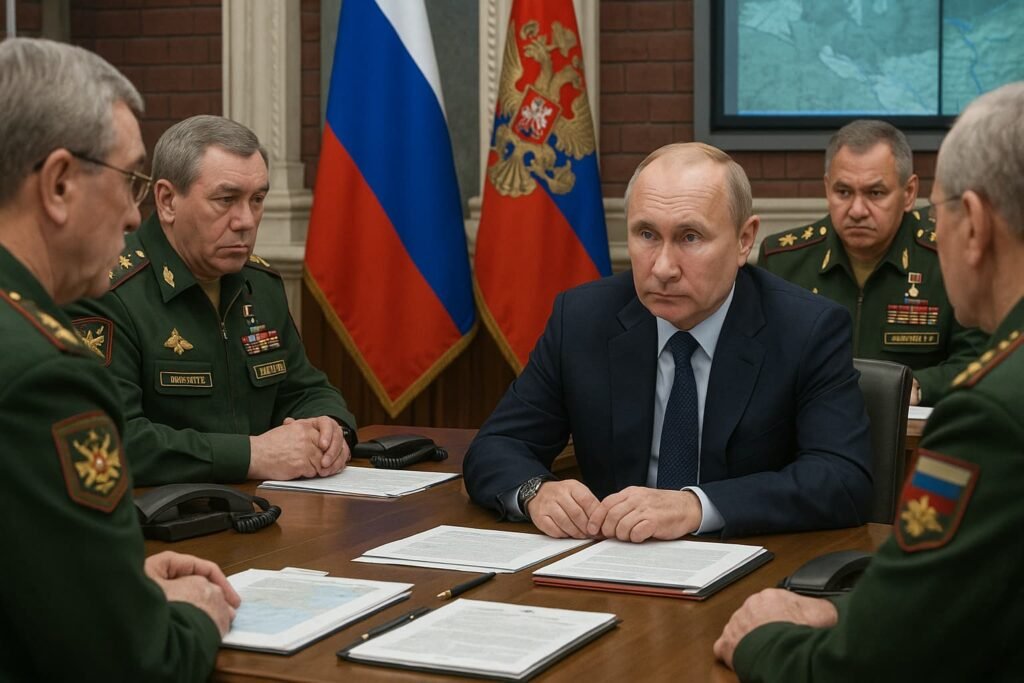
Russian President Vladimir Putin will meet US special envoy Steve Witkoff in Moscow on Tuesday, a pivotal moment in the Trump administration’s effort to finalize a negotiated settlement to end the nearly decade-long conflict in Ukraine. The high-level summit comes as the White House publicly expressed “very optimistic” expectations for progress after two days of intensive talks between Ukrainian and US officials in Florida.
Witkoff’s arrival in Moscow marks the most consequential diplomatic contact between the United States and Russia since Washington circulated a controversial draft peace proposal in November — a plan that was initially viewed as highly favorable to Moscow before being revised following Ukrainian and European pushback.
Senior officials told CNN that Jared Kushner, President Donald Trump’s son-in-law and informal diplomatic adviser, is also expected to be present in Moscow, underscoring the White House’s hands-on approach to the talks.
“Constructive” but Difficult Negotiations in Florida
The Moscow meeting follows two days of US-Ukraine negotiations in Florida involving Witkoff, Kushner, Ukrainian President Volodymyr Zelensky’s team, and senior negotiator Rustem Umerov. Zelensky described the talks as “constructive,” while warning that “some tough issues still have to be worked through.”
Those issues center primarily on sovereignty and territorial integrity — the most sensitive component of any peace settlement.
Speaking in Paris after talks with French President Emmanuel Macron, Zelensky reiterated that Ukraine will not accept territorial concessions. “The territorial issue is the most difficult,” he said, adding that Kyiv’s priorities include robust security guarantees, long-term defense commitments, and maintaining full sovereignty.
Macron, who has become a central interlocutor between Kyiv and Washington, emphasized that no plan can move forward without Ukraine’s approval. “There is no finalized peace plan,” he said. “Territorial questions can only be decided by President Zelensky.”
Moscow Tightens Military Pressure Ahead of Talks
Tuesday’s meeting comes amid new Russian claims of battlefield gains. Russian officials asserted that their forces had captured the strategically significant town of Pokrovsk in eastern Ukraine as well as Vovchansk in the northeast. Both towns have been heavily contested for more than a year and are key nodes for Ukrainian logistics.
Ukraine strongly denied that either location had fallen, and several open-source intelligence groups tracking frontline developments said available evidence did not confirm Russian control over either city.
Still, the announcements were widely interpreted as a pressure tactic designed to shape momentum ahead of Tuesday’s discussions. The Kremlin has been explicit in saying it does not consider Zelensky legitimate — a position that Ukrainian officials say is intended to force concessions or weaken their negotiating leverage.
Andriy Kovalenko, head of Ukraine’s Center for Countering Disinformation, said Moscow’s strategy is clear: “Russia’s main aim is to ensure all pressure in the US peace plan is put on Ukraine.”
US Claims “Refined” Peace Plan; Europe Cautious
White House Press Secretary Karoline Leavitt said Monday that the draft peace plan had been “very much refined” following consultations with Kyiv and European allies.
“We feel optimistic,” Leavitt said. “We’re hopeful this war can finally come to an end.”
The early version of the draft — circulated in November — caused alarm in Kyiv and European capitals. It reportedly contained provisions aligning closely with Moscow’s demands, including limitations on NATO partnership, recognition of certain Russian-occupied territories, and instructions on how to manage billions of dollars in frozen Russian assets.
European leaders, including Macron and new UK Prime Minister Sir Keir Starmer, insisted such terms were unacceptable unless Ukraine fully agreed — and lodged formal objections.
Estonian Prime Minister Kaja Kallas warned that Moscow’s preferred negotiation dynamic remains unchanged: “Russia wants to negotiate only with those offering them something on top of what they already have. I fear pressure will be put on the weaker side.”
Witkoff’s Expanding Diplomatic Role
Witkoff, a real estate executive turned Trump envoy, has quickly become the administration’s primary channel for direct engagement with the Kremlin. He met with Zelensky, Starmer, Macron, and Umerov in the days leading up to Tuesday’s summit.
Kremlin spokesman Dmitry Peskov confirmed the meeting would take place “in the second half of the day” but gave no indication of whether a statement would follow.
Putin last week said the US draft could serve as a “basis” for a future agreement, though Kremlin officials subsequently expressed skepticism once Ukraine and Europe introduced changes.
High Stakes and Uncertain Outcomes
Diplomats say the next 48 hours may determine whether a ceasefire outline is possible before year’s end — or whether negotiations stall under mounting battlefield pressure and political strain in Kyiv.
Zelensky is balancing the talks against a major domestic corruption scandal and intensifying Russian military activity. Meanwhile, the Trump administration is eager to demonstrate progress as it deepens its engagement across Europe.
For now, optimism in Washington contrasts with continued caution in European capitals and deep distrust in Kyiv. Whether Tuesday’s meeting in Moscow can bridge those gaps remains unclear.