
By Harshit
GENEVA, DEC. 1 —
Measles, once on the verge of global elimination, is making a powerful and dangerous comeback. A new report from the World Health Organization (WHO) shows that the decades-long progress achieved through widespread vaccination is now slipping away, with outbreaks rising sharply across several regions — including countries that had previously declared measles eliminated.
According to WHO, measles deaths fell by 88% between 2000 and 2024, saving an estimated 58 million lives. But today that success is “in jeopardy,” the agency says, due to collapsing vaccination rates, weakened health systems, and global funding cuts.
Last year, 59 countries reported large or disruptive measles outbreaks, nearly three times higher than in 2021. Even more troubling: outbreaks are appearing in countries that had already achieved elimination, including Canada and the United States.
A Turning Point for Global Immunization
Dr. Kate O’Brien, director of WHO’s Department of Immunization, called measles “the world’s most contagious virus” and warned that even small pockets of unvaccinated children allow the disease to spread rapidly.
The United States, once considered a leader in measles control, is now facing its highest number of infections in decades. The CDC reports 1,798 confirmed cases this year, the most since the country first achieved elimination status in 2000.
“These spikes tell us exactly where immunization systems are failing,” O’Brien said. “Measles exposes every weakness.”
Worldwide, more than 30 million children were under-protected against measles in 2024 — either missing one dose, both doses, or never receiving any routine immunization at all.
Signs of Progress, but Not Enough
Despite rising outbreaks, WHO highlighted several success stories. In 2024, the island nations of Cabo Verde, Seychelles, and Mauritius became the first in Africa to eliminate measles. Meanwhile, 21 Pacific Island countries eliminated both measles and rubella this year.
Dr. Diana Chang Blanc, who leads WHO’s Essential Program on Immunization, said the progress proves that elimination is possible — but only if coverage remains high.
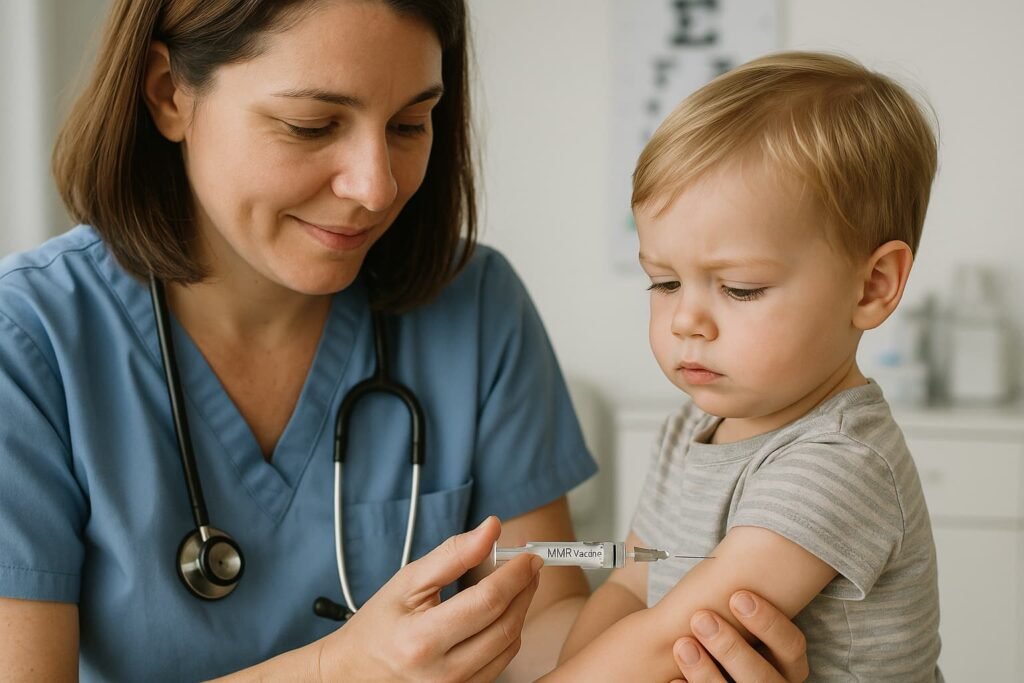
To keep measles from spreading, at least 95% of children must receive two doses of the MMR vaccine. But today, only 84% of children globally receive the first dose, and just 76% receive the second.
“That leaves tens of millions of children vulnerable,” she said.
Why Vaccination Coverage Is Falling
The COVID-19 pandemic delivered a major blow to routine vaccination. Lockdowns disrupted health services, millions missed scheduled immunizations, and many countries still have not fully caught up.
But the pandemic also seeded a different problem: misinformation.
Health officials say false claims and online conspiracy theories are playing a significant role in declining vaccine confidence in North America and Europe.
Still, misinformation is only part of the challenge. In many countries, the biggest barriers remain access and infrastructure — not hesitancy.
“Many nations simply do not have the delivery systems needed to reach hard-to-serve populations,” Chang Blanc said. “Without trained workers, cold-chain transport, and functioning surveillance networks, outbreaks are inevitable.”
Funding Cuts Threaten Global Surveillance
Another emerging threat is chronic underfunding. WHO warns that deep cuts — especially from the United States — are weakening the global measles response.
The Global Measles and Rubella Laboratory Network, which includes more than 760 labs, is facing resource shortages that may hinder outbreak detection and early containment.
“Without sustainable financing, the immunity gaps will widen,” the report states. “The world risks losing decades of progress.”
The Alarm Is Ringing
Measles is often described as the “fire alarm” of public health systems. When it resurfaces, it signals that other vaccine-preventable diseases — including whooping cough, rubella, and polio — may soon follow.
For WHO, the message is clear: unless vaccination rates rebound quickly, global measles elimination will remain out of reach.
“Every measles death is preventable,” WHO Director-General Dr. Tedros said. “We know what works: strong vaccination systems, resilient primary care, and sustained commitment. This is a solvable problem.”