
By Harshit
BIRMINGHAM, UK | NOVEMBER 29, 2025
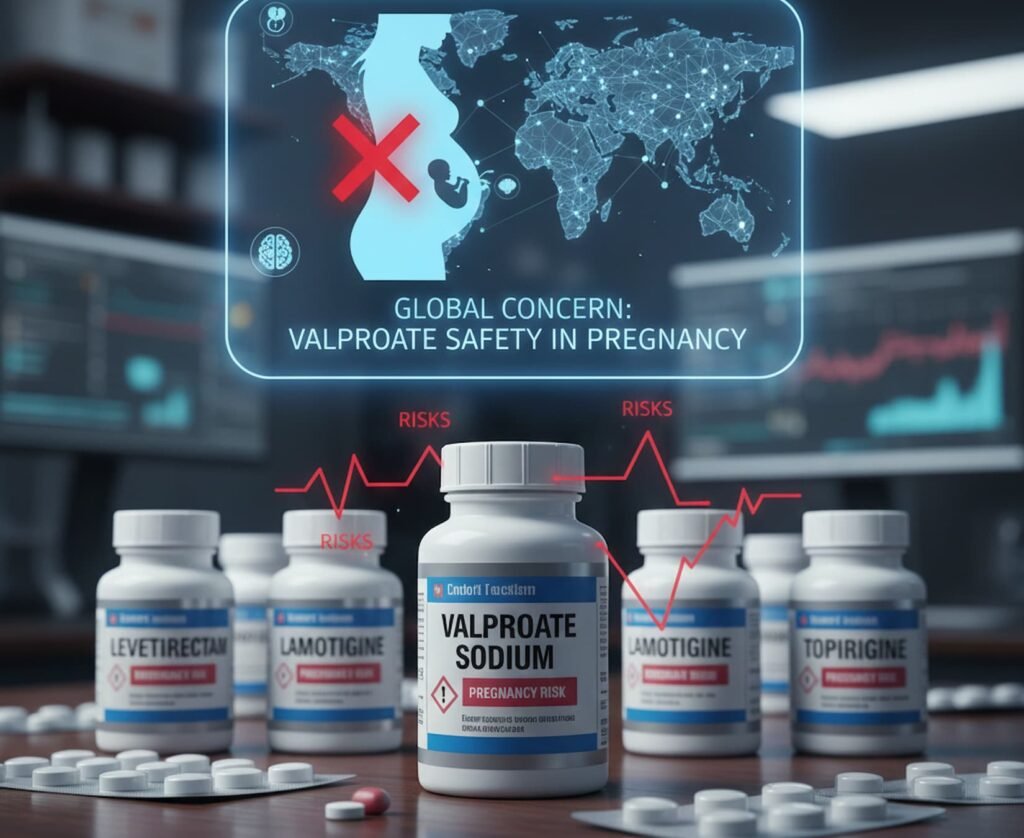
Antiseizure medications are becoming more widely available across the world, but a new global study warns that one widely used drug — valproate — continues to place millions of women and babies at risk. The analysis, conducted by researchers at Aston University with support from the World Health Organization (WHO), highlights the urgent need for stronger education, regulation, and safer treatment access in low- and middle-income countries.
The findings, based on data from 73 countries between 2012 and 2022, provide one of the most detailed pictures to date of global seizure medication patterns. And while overall access to essential neurological treatments is improving, the report stresses that prescribing practices remain inconsistent — and in some regions, dangerous.
A Decade of Progress Shadows an Alarming Trend
The study, led by Dr. Adrienne Chan and Professor Ian Wong, shows that the availability of antiseizure medications has risen steadily worldwide. This is an especially important development for low- and middle-income nations, where lack of access has long contributed to preventable disability and premature deaths among people with epilepsy.
Yet the researchers found that valproate — a drug known to cause birth defects and severe neurodevelopmental disorders when used during pregnancy — remains one of the most frequently dispensed seizure medications across many countries.
“The expansion of treatment access is encouraging,” Dr. Chan said. “But the continued global reliance on valproate for women who could become pregnant is deeply concerning. Our findings show that safety measures are not being consistently implemented.”
Why Valproate Is a Serious Global Health Risk
Valproate is listed by the WHO as an “essential medicine” because it is effective and affordable. But its risks during pregnancy are well established. Babies exposed to valproate in the womb face a dramatically increased chance of:
- Spina bifida and other neural tube defects
- Cleft palate and limb malformations
- Intellectual disability
- Learning, memory, communication and behavioral disorders
Because of these dangers, many high-income nations have adopted strict safety rules for prescribing valproate to women of childbearing age, including mandatory pregnancy prevention programs.
However, the new study reveals that these safeguards are not being applied evenly across the world — particularly in countries where newer, safer antiseizure drugs remain too expensive or difficult to access.
Uneven Progress Exposes Global Gaps
The WHO commissioned the study to better understand the availability, pricing, and usage patterns of seizure medications worldwide. According to Professor Wong, the findings show meaningful progress — but also dangerous inconsistencies.
“In some countries, improved access to a broader range of antiseizure medicines is reducing reliance on valproate,” Wong said. “But in many regions, especially where cost remains a major barrier, it is still being widely used despite the known risks.”
The report indicates that while prescribing patterns have improved in many high-income countries, valproate use has not declined at the same pace in other areas. The researchers argue that this divide underscores the need for stronger global guidelines, better training for clinicians, and greater investment to ensure safe alternatives are available everywhere.
A Call for Action to Protect Future Generations
The authors stress that their analysis, based on large-scale sales data, is only the first step. They are now calling for more detailed studies examining how these medicines are being used in real clinical settings, particularly among women of reproductive age.
Dr. Chan emphasized the urgency:
“Valproate-related birth defects and developmental disorders are entirely preventable. Stronger global alignment on safe prescribing is needed now — not only to improve patient safety today, but to protect children for generations to come.”
WHO officials have echoed these concerns, noting that addressing the issue will require collaboration between governments, regulators, health systems, and drug manufacturers to make safer alternatives affordable and widely accessible.