
By Harshit
WASHINGTON, D.C., NOV. 26 — 1 AM EDT
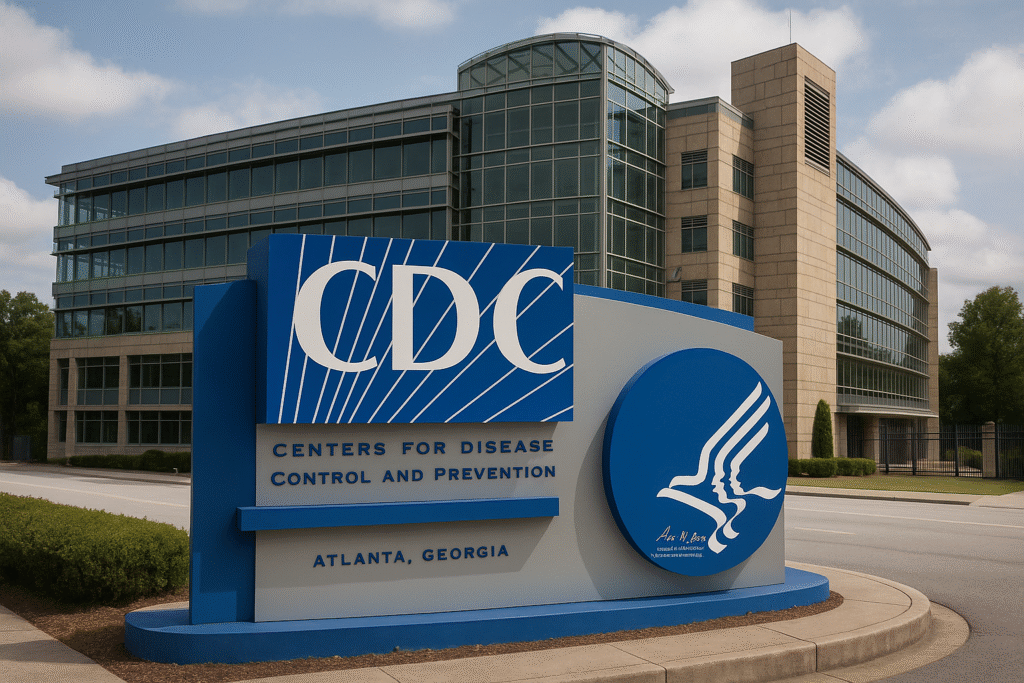
The U.S. Centers for Disease Control and Prevention is under intense national scrutiny after scientific information on its autism-and-vaccines webpage was replaced with language echoing long-debunked anti-vaccine talking points. The revised page now states that “scientific studies have not ruled out the possibility that infant vaccines contribute to the development of autism,” a message that contradicts decades of robust research.
The update, ordered by U.S. Health and Human Services Secretary Robert F. Kennedy Jr., marks a dramatic departure from longstanding federal guidance affirming that childhood vaccines do not cause autism. The shift has triggered sharp condemnation from pediatricians, public health researchers, infectious disease experts, and autism advocacy organizations, who warn that the revised wording could confuse parents, erode trust in vaccination, and fuel preventable disease outbreaks.
More than 60 national medical and advocacy groups—including the American Academy of Pediatrics, the American Medical Association, and the Autism Science Foundation—released a unified statement calling the new CDC language “misleading” and “scientifically inaccurate,” urging the agency to immediately restore the previous evidence-based information.
Scientific Consensus Remains Clear
For more than 25 years, scientists across the United States, Europe, Canada, Japan, and Israel have conducted large, meticulously designed studies involving more than 5.6 million children. These independent investigations consistently show no association between vaccines and autism.
Dr. Sean O’Leary, pediatric infectious disease specialist at the University of Colorado and chair of the American Academy of Pediatrics’ Committee on Infectious Diseases, said at a recent briefing: “This is settled science. The link between vaccines and autism has been disproven repeatedly by every high-quality study ever conducted.”
Dr. Alycia Halladay, chief science officer for the Autism Science Foundation, emphasized that scientific efforts to replicate the debunked vaccine-autism claims have produced the same result worldwide.
“All of those studies—across seven countries—have shown no link whatsoever,” Halladay said. “Vaccines have been completely exonerated.”
Despite this, the updated CDC page omits major modern studies and appears to rely on older or lower-quality reviews, while reviving discredited concerns about vaccine ingredients.
Origins of the Myth and Why It Persisted
The false narrative linking vaccines and autism originated with a 1998 paper by Andrew Wakefield, later found to contain fabricated data, undisclosed financial conflicts, and severe methodological flaws. The study was formally retracted, Wakefield lost his medical license, and global research has since proven the claims false.
But even after the paper’s retraction, fear among parents persisted.
Halladay explained that vaccines became an emotional scapegoat: “Parents want an explanation for their child’s autism. Vaccination is an easy target—it’s a memorable moment involving crying, needles, and stress. It created a narrative that preys on vulnerable families.”
What Actually Causes Autism
The scientific community overwhelmingly agrees that autism is highly genetic. More than 250 genes have been linked with the condition, many active during fetal brain development.
“In up to 20% of cases, we can identify a single genetic cause,” O’Leary said.
Environmental factors—not vaccines—can also play a role, such as maternal illness during pregnancy, premature birth, or older parental age. But vaccines are not on that list.
The rising autism diagnosis rate in the U.S. is attributed largely to better screening and expanded diagnostic criteria—not increased incidence caused by environmental exposures.
Backlash Inside and Outside the CDC
The internal reaction across federal health agencies has been unusually intense. According to former CDC officials, scientists inside the agency were not informed or consulted before the public-facing webpage was quietly rewritten.
Dr. Demetre Daskalakis, who recently resigned as director of the CDC’s National Center on Immunization and Respiratory Diseases, called the update “a national embarrassment” and “a public health emergency.”
Dr. Peter Hotez, a leading vaccinologist at Texas Children’s Hospital, said: “This is dangerous health misinformation under the CDC’s name. It needs to be corrected immediately.”
Even Sen. Bill Cassidy—himself a physician—publicly urged the agency to reassert factual guidance: “Vaccines are safe and effective and do not cause autism. Any statement suggesting otherwise is wrong and harmful.”