
By Harshit
WASHINGTON — Nov. 24, 2025 / 8 AM EDT
The Trump administration is preparing for expanded action in Venezuela after formally designating President Nicolás Maduro and senior members of his government as part of a foreign terrorist organization — a move that dramatically intensifies Washington’s pressure campaign and raises questions about the possibility of US military operations inside the country.
The designation targets what the US calls the “Cartel de los Soles,” a term long used by analysts to describe a loose, opaque network of Venezuelan military and political elites accused of drug trafficking and corruption. While not an organized cartel in the traditional sense, the State Department’s decision places Maduro and his inner circle in one of its most serious counterterrorism categories.
A Controversial Tool With Broad Consequences
The designation does not authorize lethal strikes on its own, but it gives Trump sweeping new powers to impose sanctions on Venezuelan infrastructure, financial assets, and individuals tied to the alleged network. Legal experts note it opens the door to expanded intelligence operations, interdictions, and military support roles.
Administration officials describe it differently. Several have told CNN that the move “broadens military options,” and could justify strikes on Venezuelan military or government facilities if deemed necessary. The Pentagon has not publicly confirmed such plans, but the unofficial messaging has fueled speculation inside Washington.
Maduro has repeatedly denied involvement in drug trafficking and dismissed the allegation as “fabricated warfare.” Venezuelan officials insist the so-called cartel is a political invention designed to undermine the government.
Operation Southern Spear Raises Tensions
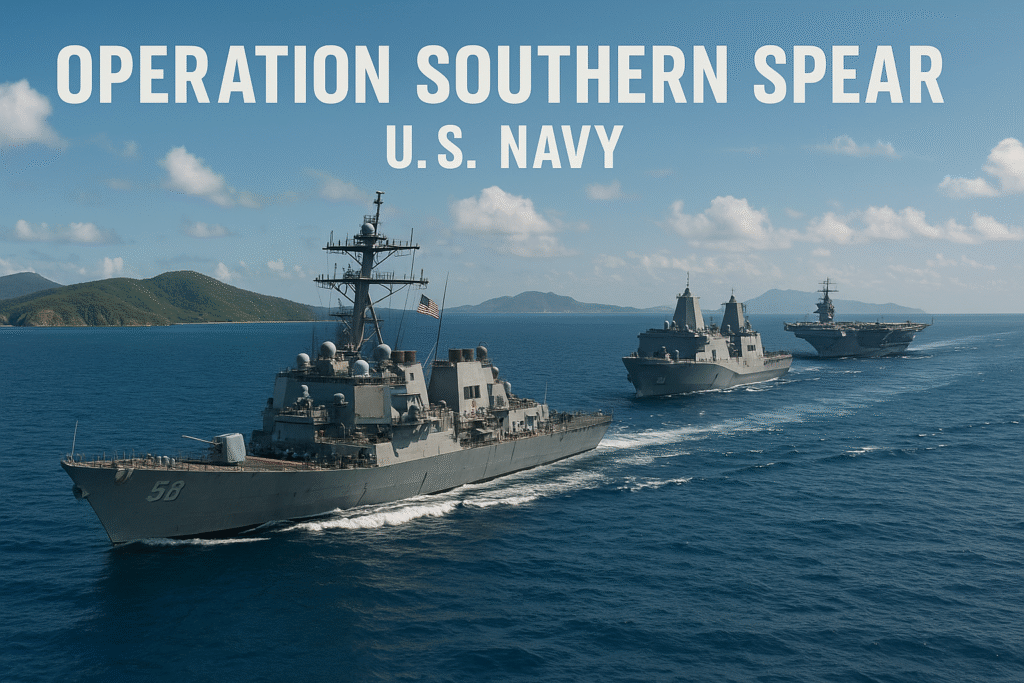
The designation arrives as the US military concludes one of its largest deployments in the region in years. Under Operation Southern Spear, more than a dozen US warships and 15,000 troops have been arrayed across the Caribbean and the Gulf of Mexico.
Pentagon officials say the operation is aimed at cutting drug trafficking routes and limiting irregular migration flows, but the scale of the deployment — including US boat strikes that have killed dozens — has raised fears that the US is edging closer to direct involvement in Venezuela’s internal crisis.
Trump has been briefed on a range of options, from limited strikes to special operations raids. According to one US official, the president is “open to a spectrum of action,” but still sees diplomatic pressure as a potential alternative. “Doing nothing,” the official added, remains on the table.
Public Opinion Strongly Opposes Intervention
Despite the administration’s preparations, the American public appears deeply skeptical. A new CBS News/YouGov poll shows 70% of Americans oppose US military action in Venezuela, while 76% say the administration has not adequately explained its position.
Those findings underscore the political risks associated with escalation in a region where the US has a long, fraught history of intervention.
Mixed Signals From the White House
Though Trump has raised the pressure on Maduro, he has also suggested openness to dialogue. Last week, he said Maduro “would like to talk,” adding that he would be willing to speak with the Venezuelan leader “at a certain time.”
For now, the White House has offered no further clarity. Officials did not respond to questions about whether any discussions had been scheduled or whether diplomatic outreach was underway.
Military Activity Near Venezuela Intensifies
Tensions escalated on Thursday when at least six US aircraft — including a B-52 strategic bomber, an F/A-18E fighter jet and multiple reconnaissance planes — operated near Venezuelan airspace for several hours, according to open-source flight data reviewed by CNN.
While the Pentagon described the flights as routine patrols, their proximity to Venezuelan territory appeared designed to send a message about American capabilities and readiness.
The ripple effects extended to civilian aviation. Over the weekend, three international airlines suspended flights out of Venezuela after the Federal Aviation Administration warned US carriers of a “potentially hazardous situation” in the country’s airspace.
What Comes Next
Administration officials insist the goal is not regime change but counterterrorism, anti-trafficking efforts, and regional security. Yet many analysts see the pressure campaign as a possible prelude to an attempt to oust Maduro without a direct invasion.
For now, the White House is signaling both readiness and restraint — expanding its legal authority, positioning military assets, and sending warnings, while also leaving the door open for talks.
Whether the next phase is diplomatic or military may depend on whether Maduro bends to pressure — or calls Washington’s bluff.