
By Harshit
ATLANTA, NOV. 21—
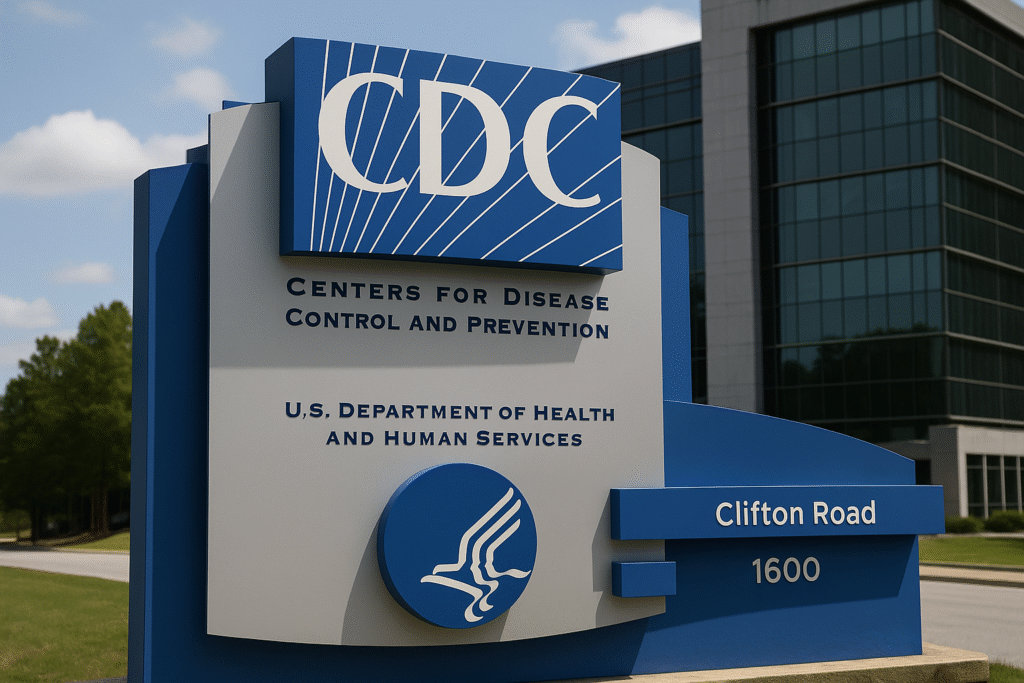
The U.S. Centers for Disease Control and Prevention (CDC) is facing intense national scrutiny after scientific information on its website was replaced with language that echoes long-debunked anti-vaccine talking points—statements suggesting that studies have not ruled out a possible link between childhood vaccines and autism. The shift has drawn sharp condemnation from leading medical experts, former agency officials, and public health advocates, who warn that the changes could further erode already fragile trust in routine immunization.
A Sudden Shift in Messaging
The CDC’s page on vaccine safety now features bullet points claiming that “studies have not ruled out” a connection between vaccines and autism—despite decades of scientific evidence firmly demonstrating no such link.
Experts say the language mirrors a common tactic used to sow doubt in established science: claiming something cannot be “ruled out,” even when overwhelming research shows no causal relationship.
“You cannot design a scientific study to prove a negative,” said Alison Singer, president of the Autism Science Foundation. “What you can do is look at the preponderance of evidence—and the evidence is extremely clear: vaccines do not cause autism.”
Leading scientific bodies—including the CDC, World Health Organization, American Academy of Pediatrics, and Autism Science Foundation—have repeatedly affirmed this position.
Decades of Evidence Ignored
One of the largest studies on this subject—a 2019 Danish analysis of more than 650,000 children—found no increased risk of autism in vaccinated children compared with unvaccinated ones. Additional research involving millions of children worldwide has produced the same conclusion.
Yet the updated CDC page omits key studies, instead leaning on outdated reviews and raising discredited concerns about aluminum or other vaccine ingredients.
Dr. Paul Offit of the Vaccine Education Center at Children’s Hospital of Philadelphia called the new CDC language “misleading by design,” noting in a commentary that if one applied the same flawed logic, “you could also claim chicken nuggets might cause autism, because it cannot be disproven.”
Internal Turmoil and Public Outrage
According to former CDC officials, agency scientists were blindsided by the update, which appeared without their involvement.
Dr. Demetre Daskalakis, who recently resigned as director of the CDC’s National Center on Immunization and Respiratory Diseases, called the changes “a national embarrassment” and “a public health emergency.”
Dr. Peter Hotez, a leading vaccine researcher, described the page as “dangerous health disinformation under the CDC’s name” and urged its immediate removal.
Sen. Bill Cassidy (R-La.), a physician, also criticized the update, saying, “Vaccines for measles, polio, hepatitis B and other childhood diseases are safe and effective and will not cause autism. Any statement to the contrary is dangerous.”
A Growing National Concern
This update marks the latest in a series of politically driven moves by the Trump administration to cast doubt on long-standing U.S. vaccine policy. The administration has already appointed advisers with long histories in the anti-vaccine movement, including individuals previously involved in debunked thimerosal and MMR conspiracy theories.
Officials warn this shift comes at a critical moment. Childhood vaccination rates in the U.S. have already declined, fueling outbreaks of measles and whooping cough. On Monday, CDC disease detectives leading the national measles response told state health officials that the U.S. may soon lose its status as a country with eliminated measles transmission.
Dr. Sean O’Leary, chair of the American Academy of Pediatrics’ Committee on Infectious Diseases, said the new CDC edits could worsen the problem:
“I fear this will lead to fewer children being vaccinated, and children suffering from diseases they never needed to face.”
Reactions Within the Federal Government
HHS spokesperson Andrew Nixon said the agency is “updating the CDC’s website to reflect gold-standard scientific evidence,” though the new language contradicts that goal.
FDA Commissioner Dr. Marty Makary recently acknowledged the importance of honest communication about vaccine risks, but also stated clearly: “I do not believe vaccines cause autism.”
The page retains a heading stating “Vaccines do not cause autism” only because of an agreement made during the confirmation of HHS Secretary Robert F. Kennedy Jr., who pledged to Senate leaders that the headline would remain intact.
A footnote now explains that the headline was preserved due to that agreement—a detail experts call unprecedented and politically motivated.
A Threat to Public Health
Experts warn that suggesting “uncertainty” around well-settled scientific conclusions is a hallmark of disinformation campaigns.
Dr. Hotez summarized the stakes:
“They are rewriting history and rewriting science. This will cost lives.”