
By Harshit | 19 November 2025 | San Francisco | 6:00 AM PDT
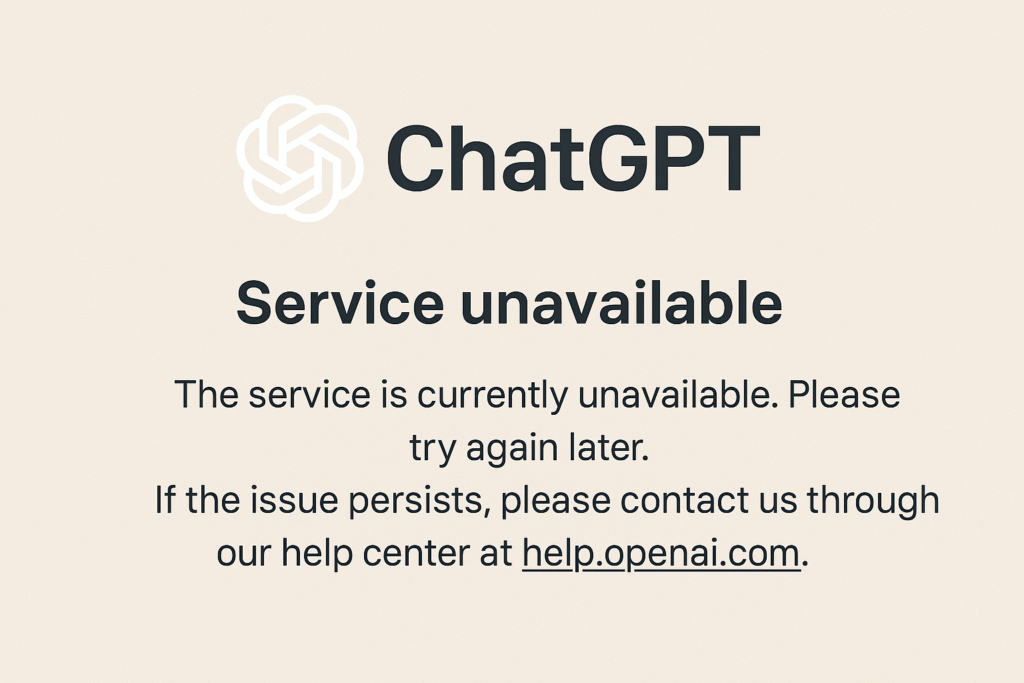
A major Cloudflare outage on 18 November 2025 triggered one of the most disruptive internet failures of the year, taking down ChatGPT, OpenAI’s APIs, X (formerly Twitter), Discord, Shopify stores, banking portals, and thousands of services that depend on Cloudflare’s global network. The breakdown, which lasted several hours, exposed a critical reality: much of the modern internet rests on a few invisible infrastructure providers — and when they fail, the web breaks.
While outages at big tech companies aren’t new, what made this event extraordinary was not just the scale, but the mechanism. Cloudflare — a content delivery network (CDN) and security layer that handles trillions of requests per day — experienced a cascading internal failure that crippled DNS resolution, routing, and security gateways. Without these core functions, even companies like OpenAI and X that weren’t directly “down” were unreachable.
This article explains how the outage happened, why it took ChatGPT and X offline, and what it reveals about the hidden plumbing of the internet.
How the Outage Began: A Failure at the Internet’s Front Door
Cloudflare operates what is essentially the front door of the internet. When you open ChatGPT, X, or countless other sites, your request is routed through Cloudflare’s global network before reaching the company’s actual servers.
On November 18, Cloudflare suffered a failure inside its Global Control Plane — the system that synchronizes configuration, routes traffic, distributes DNS instructions, and enforces security policies. Engineers described it as a “misconfiguration event that propagated incorrectly,” similar to earlier historic outages caused by BGP or DNS disruptions.
The result:
- DNS queries began failing, meaning browsers couldn’t find where services like OpenAI.com were located.
- API requests hung or timed out.
- Traffic routing between Cloudflare’s data centers began to desynchronize.
- Firewall rules and security policies stuck in a corrupted state, blocking normal traffic.
Even though Cloudflare insists the issue was “not caused by a cyberattack,” its behavior mirrored the effects of a large-scale DDoS — except this time the disruption was internal.
Why ChatGPT Went Down First
OpenAI relies heavily on Cloudflare for:
- DNS resolution
- API protections
- Load balancing
- DDoS mitigation
- Edge caching
- Traffic optimization for ChatGPT and GPT-5 services
When Cloudflare’s routing systems broke, OpenAI’s entire stack became unreachable from most regions. Users worldwide reported:
- “Unable to load ChatGPT.”
- “Model request failed.”
- “ChatGPT is not responding.”
- “OpenAI API endpoint could not be reached.”
Importantly, OpenAI’s servers were not actually offline — but without Cloudflare functioning, your request could not reach them. This is why engineers call Cloudflare the middleware layer of the internet.
This also disrupted third-party apps using OpenAI’s API, including:
- AI assistants
- Enterprise integrations
- Chatbots
- Automation tools
- Gaming and education apps
Developers flooded status pages asking why their software completely broke in minutes.
Why X (Twitter) Was Hit So Hard
X, which migrated large portions of its infrastructure to Cloudflare in 2024, lost access to key services such as:
- Login authentication
- Timeline loading
- Image caching
- Video delivery
- API endpoints
Many users reported blank timelines, missing media, or inability to post.
X’s internal systems also rely on Cloudflare for bot filtering and automated moderation pipelines, which temporarily failed, forcing the platform to restrict certain features.
This shows how deeply modern social platforms rely on infrastructure providers for basic functionality.
How Cloudflare Works — And How One Failure Breaks the Internet
To understand why this outage was so devastating, we need to understand the three invisible systems Cloudflare runs:
1. DNS (Domain Name System)
This converts domain names (chat.openai.com) into numerical IP addresses.
When Cloudflare DNS fails, browsers cannot locate servers.
2. CDN (Content Delivery Network)
Cloudflare stores website data across 300+ cities, so users get fast access.
If CDN nodes desynchronize, you get inconsistent or missing content.
3. Reverse Proxy + Security Layer
Cloudflare filters traffic, blocks attacks, and forwards safe traffic to companies like OpenAI and X.
If the security layer fails, it can mistakenly block legitimate users.
Cloudflare’s outage impacted all three layers at once — a rare but catastrophic scenario.
A Reminder of the Internet’s Fragility
This event demonstrates how concentrated the global internet has become:
- Cloudflare handles ~20% of all HTTP traffic worldwide.
- Akamai, Fastly, and Cloudflare form the core of the modern web.
- Single failure points can trigger cascading global outages.
What happened on November 18 was not just an engineering problem — it was an illustration of structural vulnerability.
Experts warn that with megaplatforms like OpenAI, X, Amazon, and TikTok relying on the same few networks, future outages could become even more severe.
Could Something Like This Happen Again?
Yes — and it likely will.
Internet infrastructure is so complex and interconnected that:
- A single misconfiguration
- A failed software update
- A corrupted route
- A faulty DNS rollout
can impact millions instantly.
Cloudflare has since said it is implementing new safeguards, including staged rollouts, audit checks, and control-plane isolation to prevent systemic propagation of bad configurations.
But even with these changes, outages remain an unavoidable part of the internet’s design.