
By Harshit
WASHINGTON, November 13, 2025 — 12:01 AM EST
In a sweeping and precautionary move, ByHeart, a U.S.-based baby formula manufacturer, announced Tuesday that it is recalling all of its infant formula products nationwide following a multistate outbreak of infant botulism under investigation by the U.S. Food and Drug Administration (FDA) and the Centers for Disease Control and Prevention (CDC).
The recall affects all ByHeart Whole Nutrition Infant Formula products, including both cans and single-serve sticks. The decision was made after preliminary laboratory and epidemiologic evidence suggested potential contamination with Clostridium botulinum — the bacterium that produces the potent botulinum toxin, responsible for the rare but life-threatening condition infant botulism.
“At this moment, the most important thing for you to know is that all ByHeart product must be discarded,” said ByHeart co-founders Mia Funt and Ron Belldegrun in a letter to parents posted Tuesday. “We are so sorry, and are committed to doing anything we can to support you.”
Outbreak Spanning 12 States
According to the FDA, as of Monday, 15 infants from 12 states — including Arizona, California, Illinois, Kentucky, Minnesota, North Carolina, New Jersey, Oregon, Pennsylvania, Rhode Island, Texas, and Washington — have been hospitalized with confirmed or suspected cases of infant botulism after being fed ByHeart’s Whole Nutrition formula.
The affected infants ranged in age from 16 days to 157 days. All required treatment with BabyBIG, an FDA-approved intravenous antitoxin used for infant botulism, though no deaths have been reported to date.
“Infant botulism is a very rare disease, but it can lead to progressive muscle weakness and respiratory arrest if not treated promptly,” said Dr. Erica Pan, California’s state public health officer. “We are urging parents to stop using ByHeart formula immediately.”
What Is Infant Botulism?
Infant botulism occurs when a baby ingests Clostridium botulinum spores, which can then germinate in the intestines and release botulinum neurotoxin, one of the most potent biological toxins known.
Symptoms — which may take several weeks to develop — can include:
- Constipation
- Poor feeding
- Loss of head control
- Weak or altered cry
- Difficulty swallowing or breathing
If untreated, paralysis can progress to respiratory failure.
The CDC notes that while the illness is rare, powdered infant formula can be a source if contaminated during production or handling.
FDA: ByHeart Disproportionately Linked to Cases
Since August 2025, 84 infants nationwide have received treatment for infant botulism, according to data from the California Department of Public Health’s Infant Botulism Treatment and Prevention Program.
Among these cases:
- 43% had been exposed to powdered infant formula, and
- Over 40% of those infants consumed ByHeart Whole Nutrition Formula.
“This information shows that ByHeart formula is disproportionately represented among sick infants,” the FDA stated. “Given that ByHeart represents roughly 1% of all U.S. formula sales, the pattern is concerning.”
The agency emphasized that no other infant formula brands have been linked to this outbreak and that investigations are ongoing.
Company Response and Cooperation
In their letter, ByHeart executives said they were working closely with federal authorities and conducting extensive internal testing on all batches of their products.
“We immediately began conducting our own testing on all ByHeart batches,” Funt and Belldegrun wrote. “Additionally, we are providing the FDA complete and unrestricted access to all of our facilities and products for their investigation.”
The company added that it has created an online guide to help parents transition safely to alternative infant formulas.
ByHeart’s recall affects all open and unopened products currently on the market. The FDA advises parents and caregivers to immediately discard all ByHeart infant formula and not to donate or share it.
Preliminary Test Results
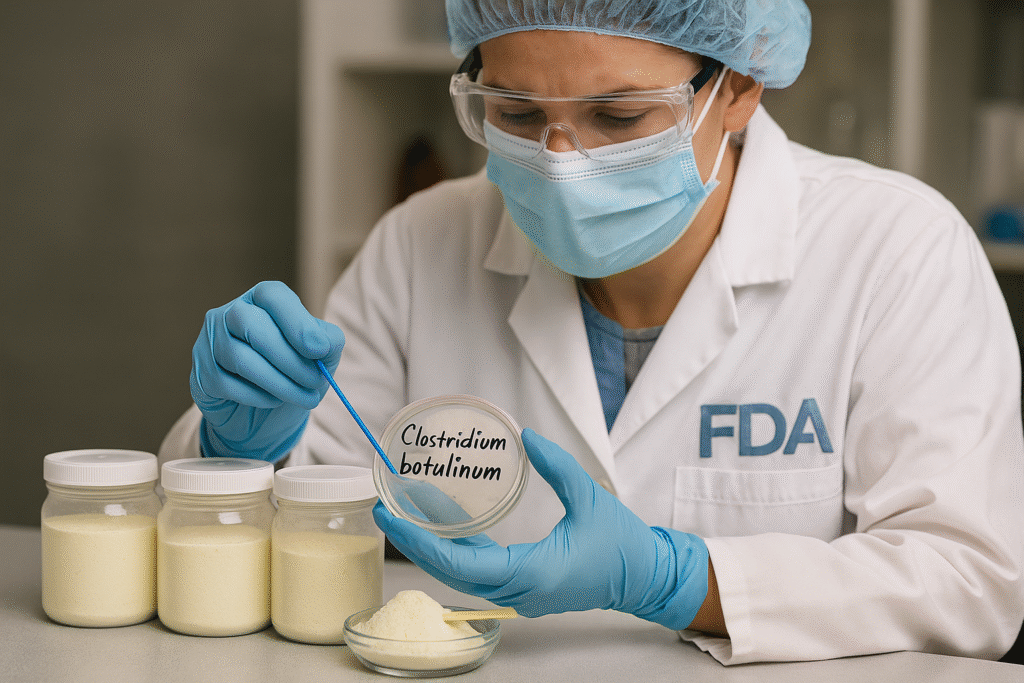
Over the weekend, the California Department of Public Health reported that Clostridium botulinum was detected in an open can of ByHeart formula that had been fed to one of the affected infants.
However, the FDA clarified that no unopened product has yet tested positive for the bacteria or toxin. Additional testing of sealed cans and production samples is ongoing in multiple state and federal laboratories.
Several state health departments, including those in California, Pennsylvania, and Texas, are also conducting independent analyses of leftover formula samples provided by affected families.
How Parents Can Respond
The FDA urges parents to immediately stop using ByHeart formula and consult pediatricians if their infants exhibit any symptoms of botulism.
Parents should contact ByHeart’s customer support line for refunds and guidance on safe formula alternatives.
The CDC advises caregivers to seek emergency medical care if infants show muscle weakness, drooping eyelids, or trouble breathing, which may signal botulinum toxin exposure.
A Troubled Industry Still Under Scrutiny
This recall marks another major disruption for the U.S. baby formula market, still recovering from the 2022 Abbott Nutrition recall that triggered a nationwide formula shortage.
ByHeart, founded in 2016, positioned itself as a premium, small-batch formula brand emphasizing “whole nutrition” and transparency. The company operates its own manufacturing facility and supply chain — a rarity among U.S. formula makers.
The FDA’s Infant Formula Safety and Modernization Initiative, launched after the Abbott crisis, requires companies to maintain rigorous contamination monitoring and immediate reporting protocols.
Still, experts say that powdered infant formula remains vulnerable to contamination due to its complex manufacturing and packaging processes.
Outlook
While investigations continue, both federal agencies and ByHeart emphasize that infant safety is the top priority.
“Parents should not panic, but they should take this recall seriously,” said Dr. Jennifer Lightfoot, a pediatric infectious disease specialist. “Botulism is treatable, but early recognition and prompt medical care are crucial.”
The FDA said it will release updated findings as laboratory results become available in the coming weeks.
“We are working around the clock with our partners to determine the full scope of contamination and ensure that every potentially affected product is off the market,” the agency stated.