
By Harshit, BELÉM, Brazil, Nov. 12, 2025 — 8:40 p.m. BRT
Tensions flared at the United Nations Climate Change Conference (COP30) in Belém, Brazil, on Tuesday as hundreds of Indigenous protesters marched and forced their way into the summit venue, demanding urgent action to protect their ancestral lands from deforestation, mining, and oil exploration.
The protest — the largest Indigenous-led demonstration so far at this year’s climate conference — underscored the growing divide between Brazilian President Luiz Inácio Lula da Silva’s climate promises and the realities facing Indigenous communities on the ground.
“We can’t eat money,” said Gilmar, an Indigenous leader from the Tupinambá community near the Tapajós River in northern Brazil. “We want our lands free from agribusiness, oil exploration, illegal miners, and loggers.”
According to the United Nations, protesters breached a security barrier at the main entrance to the COP venue, causing minor injuries to two guards and slight property damage before being dispersed peacefully.
“We Are Here to Defend Life”
Hundreds of Indigenous representatives from across the Amazon Basin — including Brazil, Peru, Colombia, and Ecuador — arrived in Belém after days of travel, chanting, dancing, and carrying banners reading “Our land, our life.”
The demonstrators accuse governments, including Brazil’s, of allowing extractive industries to encroach on protected Indigenous territories, despite public pledges to curb deforestation and recognize Indigenous land rights.
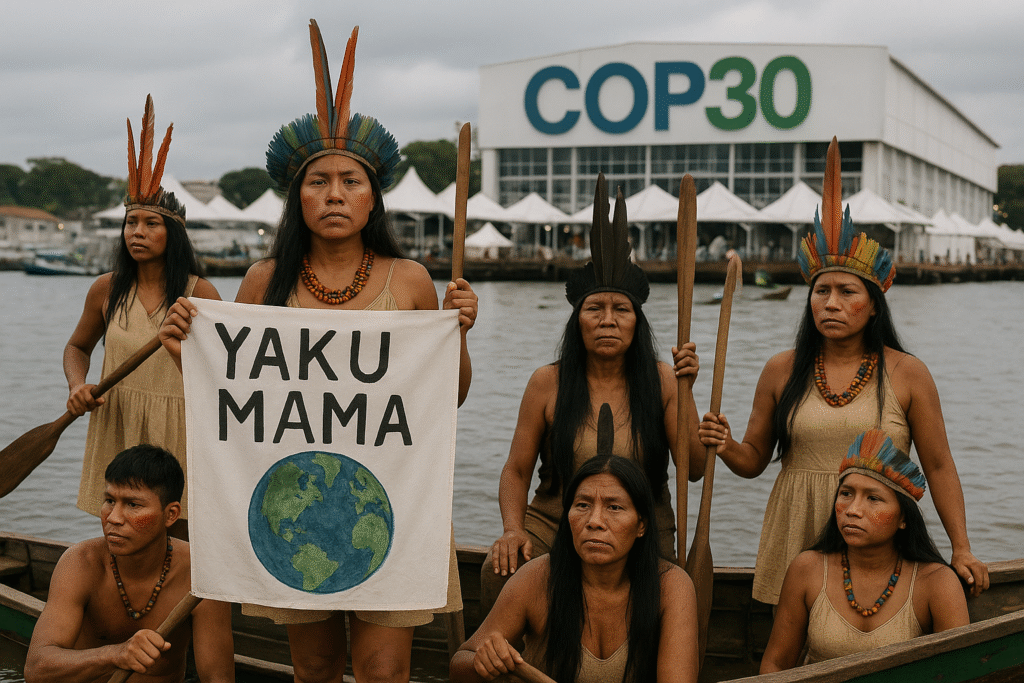
“Most states want our resources, but they don’t want to guarantee our rights,” said Leo Cerda, an Ecuadorian Kichwa activist and one of the organizers of the Yaku Mama flotilla, which sailed 3,000 kilometers down the Amazon River to attend COP30. “We are protecting nature for all humanity.”
The flotilla’s arrival symbolized both resistance and hope — a reminder that the Amazon’s defenders are also among the world’s most endangered people.
Lula’s Climate Credibility Under Pressure
President Luiz Inácio Lula da Silva, who opened COP30 with promises to make Indigenous leadership central to global climate discussions, now faces scrutiny over his administration’s environmental record.
Last week, Lula told delegates that the world should be “inspired by Indigenous peoples and traditional communities — for whom sustainability has always been synonymous with life.”
Yet just days before the conference, Brazil’s state-run oil company Petrobras received a license to conduct offshore drilling near the mouth of the Amazon River, sparking outrage among Indigenous groups and environmentalists.
Critics say the move undermines Lula’s climate narrative and the Amazon’s role as a global carbon sink, responsible for absorbing around 340 million tons of CO₂ annually.
“You cannot praise Indigenous wisdom while authorizing oil drilling in our sacred waters,” said Marilene Wapichana, a leader from Roraima state. “That is hypocrisy.”
Indigenous Demands: “No Mining, No Oil, No Deforestation”
A joint statement issued by the Indigenous Peoples of the Amazon Basin and all Biomes of Brazil ahead of COP30 outlined clear demands:
- Legal protection of Indigenous territories from all mining, oil, and logging operations.
- Restoration of degraded forest areas.
- Global accountability for countries and corporations contributing to Amazon deforestation.
- Exclusion of Indigenous lands in the Amazon, Congo, and Borneo-Mekong basins from industrial exploitation.
The statement emphasized that preserving these territories is among “the most effective mitigation and adaptation strategies” against climate change.
Corporate Influence and the Absence of the U.S.
This year’s summit has drawn representatives from 195 countries, along with a record number of corporate and fossil fuel lobbyists — estimated by The Guardian at more than 5,000 participants over the past four years.
Their presence has drawn sharp criticism from activists, who say corporate interests continue to dominate the agenda while frontline communities are sidelined.
Meanwhile, the United States remains notably absent from COP30. Under President Donald Trump, the U.S. has withdrawn from key climate initiatives and opposed international emissions targets, including efforts to curb pollution from the global shipping industry.
The absence of the world’s largest historical emitter, environmental advocates say, further undermines the credibility of global efforts to slow warming.
“How can we talk about saving the planet when the biggest polluters aren’t even in the room?” asked Leo Cerda. “This summit must serve people, not corporations.”
Climate Finance vs. Climate Justice
Much of the debate at COP30 has focused on climate finance — the promise of wealthy nations to fund poorer countries’ transition to clean energy and adaptation measures. But for many Indigenous participants, money is a distraction from the real issue: land sovereignty and human rights.
“The forest doesn’t need funding; it needs protection,” said Gilmar of the Tupinambá community. “We live with nature, not off of it.”
While governments pledged billions in climate funds, Indigenous activists argue that little of it reaches the communities who have protected the Amazon for centuries.
A Symbolic Turning Point
Belém — a gateway to the Amazon and host city for COP30 — has become a symbolic battleground between industrial growth and environmental preservation.
As night fell on Tuesday, protesters lit candles along the Guajará Bay, chanting prayers in multiple Indigenous languages. Their message echoed across the humid air: “No Amazon, no climate.”
“This is not just about Brazil,” said Cerda. “It’s about the survival of humanity. Without Indigenous peoples, there will be no future.”
Despite the disruption, UN officials confirmed that no arrests were made and negotiations at COP30 would resume Wednesday, with new proposals on deforestation reduction and Indigenous participation expected to be tabled.