
By Harshit, WASHINGTON, Nov. 11, 2025 — 7:55 A.m. EDT
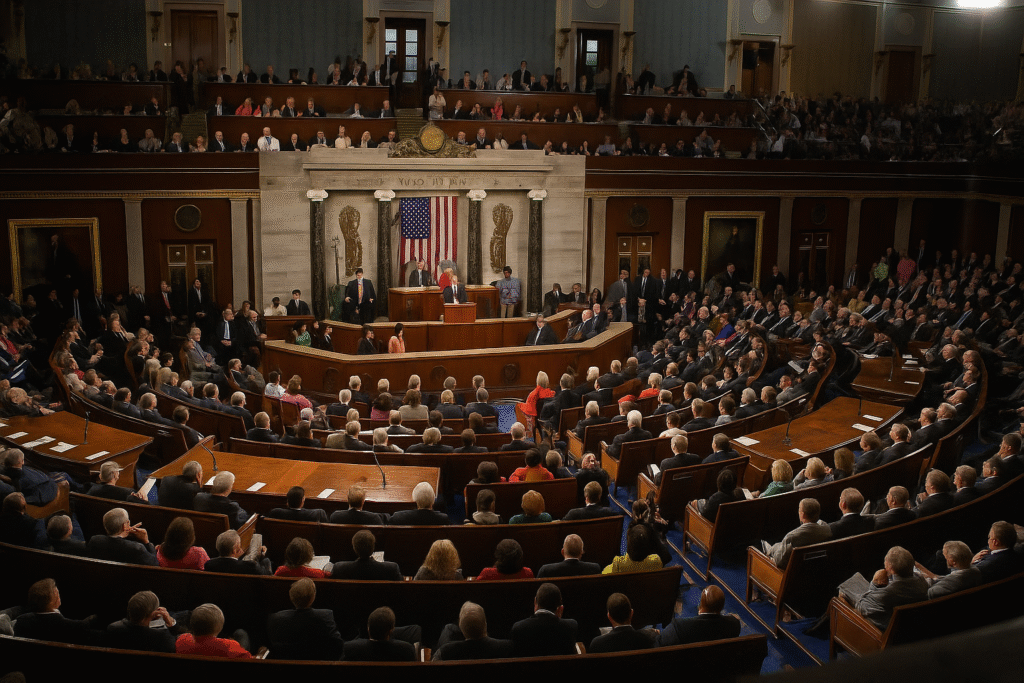
After 40 turbulent days of political gridlock, the U.S. Senate late Monday night passed a critical funding bill aimed at reopening the federal government — marking a decisive step toward ending the longest government shutdown in American history.
The measure passed 60–40, with nearly all Republicans joining eight centrist Democrats to approve the stopgap spending package that would keep the government funded through January 30, 2026. The bill now heads to the House of Representatives, which must reconvene this week before sending it to President Donald Trump, who has indicated he is prepared to sign it.
“We are going to reopen government,” said Republican Senator Susan Collins, who co-authored the compromise. “We will ensure federal employees receive the compensation they’ve earned and deserve.”
The vote capped off weeks of tense negotiations and political brinkmanship that crippled U.S. air travel, halted vital public services, and left 1.4 million federal workers unpaid.
How the Deal Came Together
The agreement was brokered over the weekend after a group of Senate Democrats — Dick Durbin (IL), John Fetterman (PA), Catherine Cortez Masto (NV), Maggie Hassan (NH), Tim Kaine (VA), Jeanne Shaheen (NH), Jacky Rosen (NV) — and Independent Angus King (ME) broke from party leadership to support reopening the government.
Republicans hold a 53–47 majority in the Senate, meaning the measure required at least 60 votes to pass. Only one Republican, Rand Paul (KY), voted against the bill, citing concerns over deficit spending.
The stopgap funding bill extends operations for key agencies and ensures back pay for federal employees, while granting temporary funding for the Department of Agriculture, military construction projects, and legislative agencies.
It also restores food aid under the Supplemental Nutrition Assistance Program (SNAP) through next September — a major point of contention during the shutdown — and guarantees that all furloughed and unpaid workers will receive back pay.
What’s in the Bill
Beyond reopening the government, the bipartisan deal includes several significant provisions:
- Funding Extension: Government operations will continue through January 30, 2026, buying Congress time to negotiate a long-term budget.
- SNAP Support: Full funding restored for the food aid program benefiting 41 million low-income Americans, ensuring uninterrupted benefits.
- Federal Worker Protections: Guarantees compensation for the 1.4 million employees affected by the shutdown.
- Departmental Budgets: Full-year funding provided for the Department of Agriculture, military construction, and legislative branch operations.
- Healthcare Subsidy Vote: Republicans agreed to hold a December vote on extending Affordable Care Act (ACA) subsidies that help millions afford insurance.
Democrats had initially vowed not to support any funding bill without concrete commitments on ACA subsidy extensions. But mounting public frustration and economic fallout forced a recalibration.
“The workers I represent were saying thank you for ending the chaos,” said Senator Tim Kaine, defending his decision to vote for the compromise.
Opposition and Frustration Within Democratic Ranks
The deal has divided Democrats. Senate Minority Leader Chuck Schumer blasted the bill as inadequate, saying it “fails to do anything of substance to fix America’s healthcare crisis.”
California Governor Gavin Newsom called the vote “pathetic,” criticizing Democrats who sided with Republicans without securing guaranteed action on healthcare.
Still, supporters argue the deal was necessary to alleviate the widespread suffering caused by the shutdown. “Waiting longer would have only prolonged the pain millions of Americans were feeling,” said Senator Jeanne Shaheen.
House to Reconvene as Shutdown Fallout Mounts
The House of Representatives, which has been out of session since mid-September, is now set to reconvene Wednesday. Speaker Mike Johnson has called members back to Washington to consider the Senate-passed bill.
Republicans control the House by just two seats, meaning the measure could face a razor-thin margin when brought to a vote.
Meanwhile, the shutdown’s nationwide impact continues to mount:
- More than 2,400 flights were canceled and 9,000 delayed on Monday due to air traffic control shortages, according to FlightAware.
- Federal food benefits were suspended for millions as the Department of Agriculture ran out of emergency funds.
- National parks, courts, and passport offices remain closed or severely limited.
President Trump Signals Support
President Donald Trump, speaking from the Oval Office earlier Monday, expressed optimism that the deal could quickly restore government operations.
“We’ll be opening up our country very quickly,” Trump told reporters. “The deal is very good.”
The agreement was negotiated between Senate Majority Leader John Thune, the White House, and the moderate Senate bloc that broke the impasse.
Thune promised that the Senate would take up healthcare subsidy legislation by mid-December, though House Speaker Johnson has so far refused to commit to the same.
The Longest Shutdown in U.S. History
The shutdown began October 1, 2025, after the Senate failed to pass a funding bill amid disputes over healthcare subsidies and spending priorities.
In the weeks since, economists estimate the U.S. economy has lost more than $25 billion in productivity and consumer confidence.
Unpaid federal workers, from air traffic controllers to National Park rangers, have staged protests across the country, demanding action.
“Every single day that this goes on, tomorrow becomes less safe than today,” said Nick Daniels, president of the National Air Traffic Controllers Association, last week.
Monday’s vote — though only a temporary fix — represents the first sign of relief after more than a month of disruption.
What Happens Next
If the House passes the bill, the federal government could reopen as early as Thursday, according to the Office of Management and Budget.
A December showdown still looms, when lawmakers must decide whether to extend ACA healthcare subsidies or risk another funding lapse in January.
Until then, the passage marks a rare bipartisan breakthrough in an era of division — one forged under the weight of public pressure and national exhaustion.
“The American people demanded that Washington stop fighting and start functioning,” Senator Angus King said after the vote. “Tonight, we finally listened.”