
By Harshit
BELEM, November 10, 2025 — 10:00 AM GMT
Ten years after the world united in Paris to confront the climate crisis, the reality on the ground has turned out far more dire than the leaders of 2015 imagined. Despite progress in renewable energy and emission pledges, global warming has accelerated, climate impacts have intensified, and the Earth is now heating faster than humanity can adapt or decarbonize.
Scientists, policymakers, and activists convening in Belem, Brazil, for this year’s United Nations Climate Conference (COP30), find themselves confronting the widening gap between promise and performance — a chasm measured in degrees Celsius, dollars in disaster costs, and millions of lives disrupted by floods, fires, and heat waves.
Warming Faster, Acting Slower
Since the signing of the Paris Climate Agreement in 2015, global temperatures have surged by 0.46°C (0.83°F) — one of the steepest decade-long increases on record, according to the European Union’s Copernicus Climate Service. Each year since 2015 has been hotter than the last, with 2025 likely to end as one of the top three hottest years in recorded history.
“We must be honest with the world and declare failure,” said Johan Rockström, director of Germany’s Potsdam Institute for Climate Research. “The harms of warming are unfolding faster and more severely than even our worst projections.”
From deadly heat waves in the Pacific Northwest to wildfires ravaging Hawaii, Canada, and southern Europe, the physical manifestations of climate change are no longer abstract models — they are lived realities.
The National Oceanic and Atmospheric Administration (NOAA) reports that the U.S. alone has suffered 193 billion-dollar weather disasters since 2015, with a total economic cost of $1.5 trillion. Meanwhile, floods have inundated Pakistan and China, and droughts have worsened across Africa and Latin America.
Melting Ice, Rising Seas
The world’s ice sheets have paid the price of inaction. Scientists estimate that more than 7 trillion tons of ice have melted from Greenland and Antarctica since 2015 — enough to fill 19 million Empire State Buildings. Global sea levels have risen 1.6 inches (40 mm) in the same period, adding the equivalent of 30 Lake Eries to the oceans.
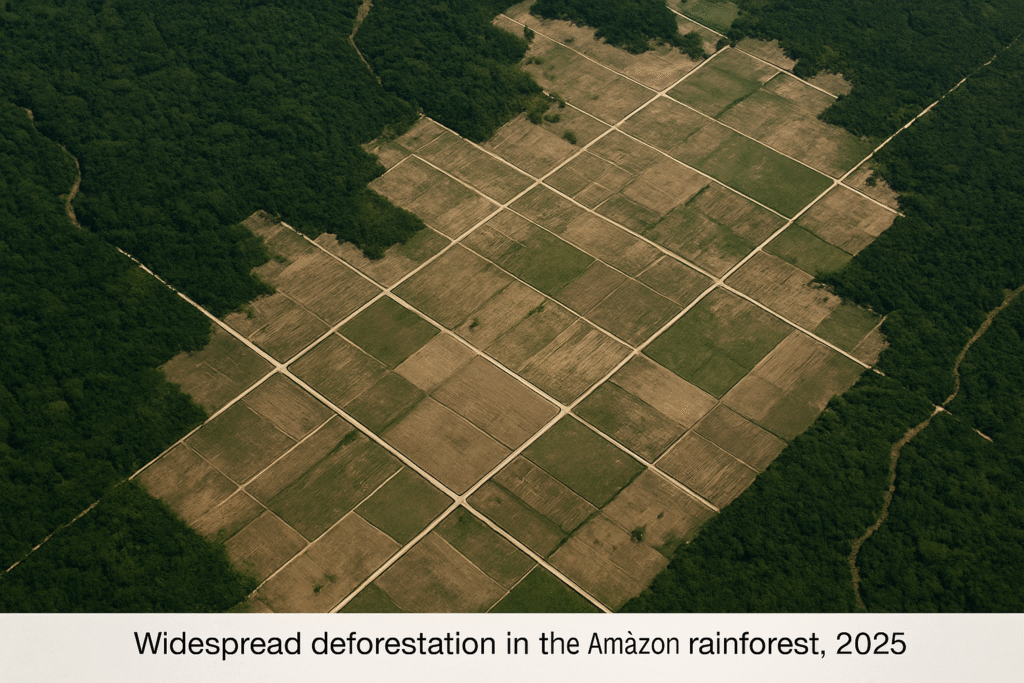
Even the Amazon rainforest, once a critical carbon sink, has become a net emitter of greenhouse gases due to rampant deforestation and fires. “We’re sawing the branch we’re sitting on,” warned Inger Andersen, executive director of the U.N. Environment Programme.
Progress Amid Failure
Despite the grim data, scientists acknowledge notable progress in clean energy and decarbonization technology. Since 2015, renewable energy costs have plummeted. Solar and wind now account for 74% of global electricity growth, according to U.N. energy reports. Electric vehicle sales have surged from 500,000 in 2015 to 17 million in 2024, reflecting a massive technological shift.
“There’s no stopping it — the clean energy tide is irreversible,” said Todd Stern, former U.S. climate envoy and chief negotiator of the Paris deal.
In 2015, the world was headed toward 4°C (7.2°F) of warming above preindustrial levels. Today, current trajectories suggest a range closer to 2.8°C (5°F) — still above the Paris target of 1.5°C, but a measurable improvement.
Yet that optimism has limits. “We are moving in the right direction, just not fast enough,” said Christiana Figueres, the U.N.’s former climate chief. “The gap between progress and what’s necessary is widening.”
Emissions Still Rising
Despite technological advances, the core problem remains: the continued burning of coal, oil, and gas. Carbon dioxide emissions have risen 5.8% since 2015, while methane levels — a far more potent greenhouse gas — have increased 5.2%, according to NOAA.
While developed nations such as the United States and European Union have reduced their emissions by about 7%, developing economies like China (+15.5%) and India (+26.7%) have expanded fossil fuel consumption to meet growing energy demands.
According to Oxfam International, the top 0.1% of the richest individuals increased their carbon emissions by 3%, while the poorest 10% cut theirs by 30% — a striking inequality in climate responsibility.
Scientists Warn: 1.5°C Is Slipping Away
The Bezos Earth Fund, in collaboration with Climate Analytics and the World Resources Institute, released a report evaluating dozens of climate metrics. It found that none are on track to achieve the 1.5°C target, though 35 are at least moving in the right direction.
“Technologies that once seemed hypothetical — like cheap green hydrogen and industrial-scale batteries — are now real,” said Kelly Levin, the report’s lead author. “But progress is far too slow to meet planetary needs.”
If the world fails to accelerate emissions cuts by 2030, scientists warn, the 1.5°C threshold will be permanently breached — ushering in a new era of climate instability marked by irreversible ice loss, rising sea levels, and widespread biodiversity collapse.
Diplomacy in Crisis
At COP30, negotiators face a fractured geopolitical landscape. Economic pressures, energy demands, and nationalist politics threaten to derail coordinated action. Yet many see this moment as pivotal.
“Ten years ago, we had a clear, orderly pathway,” said Rockström. “Today, we’re fighting uphill against both physics and politics.”
Still, optimism persists among diplomats. “We have changed the trajectory,” said Figueres. “The future is not predetermined — it’s still up to us.”
As nations meet in Belem — a symbolic location at the heart of the endangered Amazon — the stakes are unmistakable. Humanity’s collective actions in the next five years may determine the course of life on Earth for centuries to come.