Typhoon Fung-wong Makes Landfall in the Philippines, Triggering Mass Evacuations and Deadly Flooding
By Harshit
MANILA, PHILIPPINES, November 9, 2025 — 9:30 PM PHT
Typhoon Fung-wong, known locally as Uwan, made landfall in the Philippines late Sunday as a super typhoon, bringing violent winds, torrential rain, and widespread flooding across Luzon. The storm struck just days after Typhoon Kalmaegi devastated communities and left nearly 200 people dead, worsening fears among millions of residents already struggling to recover.
The eye of Fung-wong made landfall in the Aurora province at approximately 21:10 local time, carrying sustained winds of around 185 km/h (115 mph) and gusts reaching 230 km/h (143 mph). The country’s state weather bureau warned that the storm poses a “high risk of life-threatening storm surge”, destructive wind damage, and landslides as it tracks northwest across Luzon.
More than 900,000 people have been evacuated from coastal villages, flood-prone communities, and landslide-risk mountain regions. Authorities have confirmed at least two deaths so far, including one person who drowned and another who was found trapped under debris in Catbalogan City.
Contents
Coastal Regions Brace for Impact
In Aurora, where beachfront hotels line the coast, the usually busy district of Sabang has fallen silent. Hagunoy, a 21-year-old hotel worker, told BBC News that police went door-to-door throughout the week to ensure all guests were evacuated.
“We tied windows shut with rope and boarded the doors. I will stay to watch the property, but I’ll leave when the wind gets worse,” he said, standing near rising tides that slammed into the seawall.
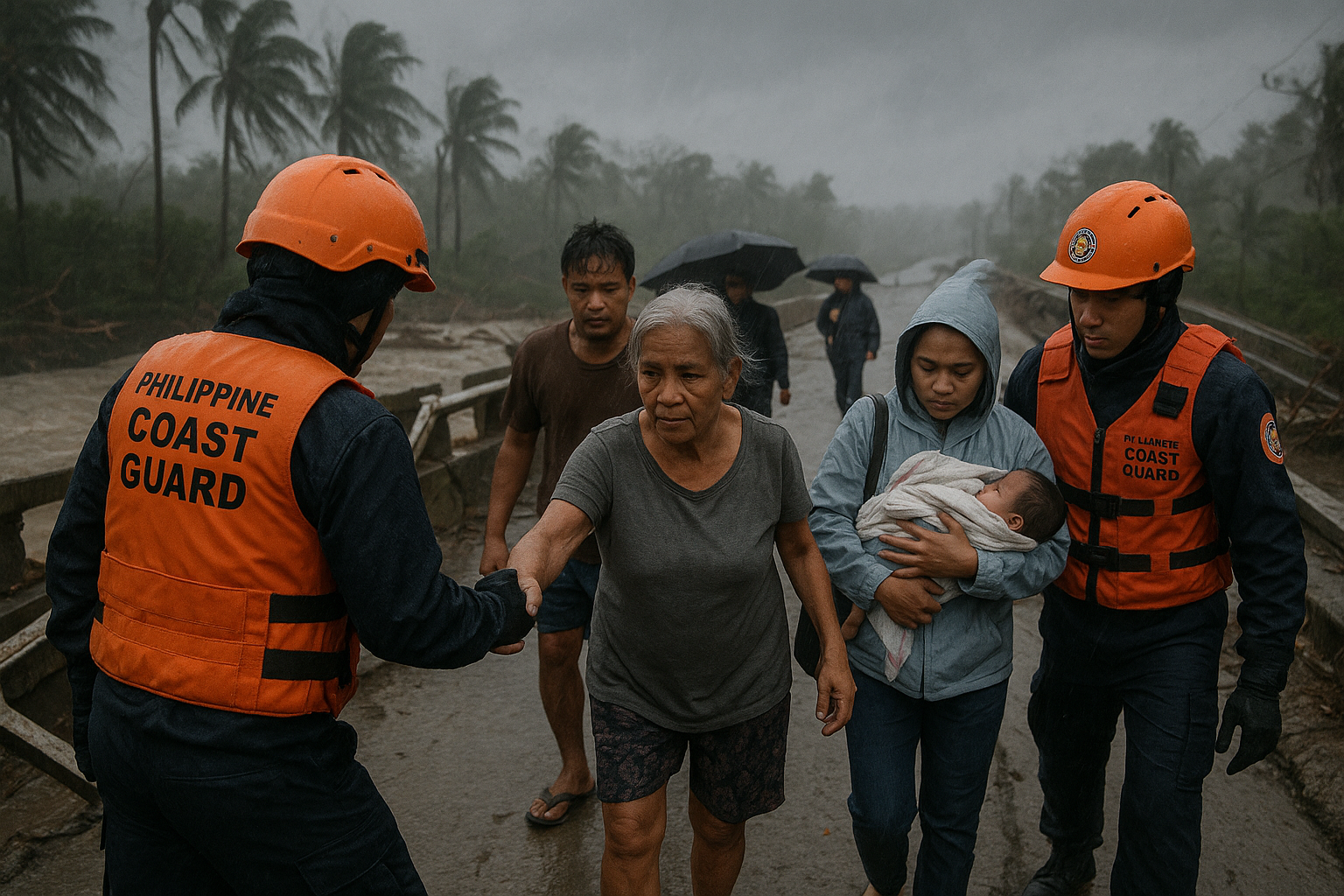
Elsewhere along the Bicol and Quezon coastlines, the Filipino Coast Guard helped evacuate residents ahead of the storm. Videos shared on social media showed officers escorting families across storm-battered bridges under heavy rain and strong winds.
Shelters Fill With Families, Children, and Displaced Survivors
In central Aurora, hundreds of people have taken refuge in a sports complex converted into an evacuation shelter. Parents say the memory of Typhoon Haiyan (2013), which killed more than 6,000 people, has not faded.
“We felt very worried because of the strength of the typhoon, and we have young children to think of,” said Jessa Zurbano, who arrived at the shelter with her family.
Another evacuee, Patry Azul, explained, “Our house is made of wood and we live close to the sea. We didn’t feel safe staying there.”
For communities already battered by Typhoon Kalmaegi, the timing of Fung-wong has deepened anxiety. “I just want to keep my family safe,” said Norlito Dugan, who evacuated to a church shelter in Sorsogon.
Transportation Halted, Flights and Airports Closed
The civil aviation authority has suspended operations at several airports across Luzon, leading to the cancellation of almost 300 flights. Roads have also been blocked due to fallen trees, landslides, and flooding.
Weather officials estimate 200 mm or more of rainfall will fall over parts of Luzon, including mountain provinces where saturated slopes pose a severe landslide threat. The capital region, Metro Manila, could see 100-200 mm, enough to cause major urban flooding.
Worsening Weather Linked to Climate Change
While climate change does not necessarily increase the number of typhoons, scientists say warmer oceans and warmer air increase storm intensity, leading to:
- Higher wind speeds
- Heavier rainfall
- Stronger storm surges
- Higher flood risk in coastal regions
The Philippines sits along the Pacific typhoon belt, making it one of the most storm-vulnerable countries in the world. Roughly 20 tropical cyclones form near this region each year, with half making direct landfall in the country.
The Days Ahead
Authorities say Fung-wong is expected to weaken slightly as it moves inland but will remain a dangerous typhoon as it crosses northwestern Luzon and heads toward Taiwan later this week.
The national government has declared a state of calamity, unlocking emergency funds and fast-tracking deliveries of relief supplies such as rice, bottled water, medical aid, and temporary shelter materials.
For now, officials urge people in affected areas to remain in shelters, avoid floodwaters, stay updated through local advisories, and prepare for prolonged outages in electricity and communications.
This is a developing story, and additional updates will follow as authorities release new information.