
By Harshit, WASHINGTON, NOVEMBER 8
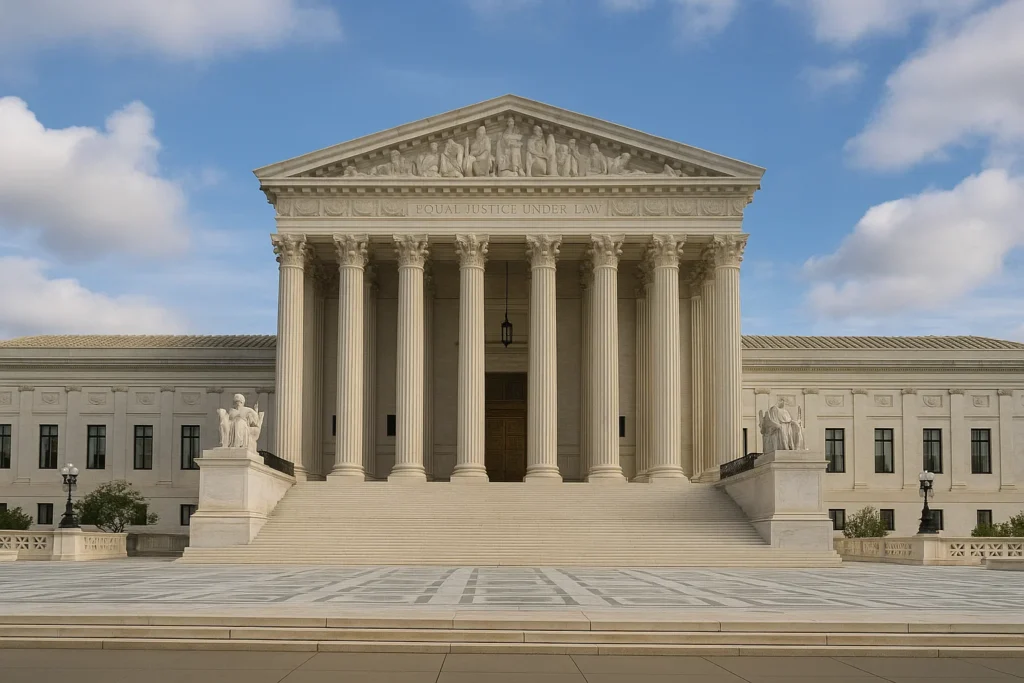
A brief but consequential intervention by the U.S. Supreme Court on Friday has injected new uncertainty into the fate of food assistance for tens of millions of Americans. Justice Ketanji Brown Jackson issued a temporary administrative stay blocking a lower court order that required the Biden administration to immediately provide full Supplemental Nutrition Assistance Program (SNAP) benefits for November. Her decision gives the appeals court more time to review the case but leaves millions unsure whether they will receive the full amount of food stamp support needed to feed their families this month.
The ruling means the U.S. Department of Agriculture (USDA) is not yet required to transfer the $4 billion in additional funds ordered by a federal district court to restore full SNAP benefits. The administration has been providing partial payments while tapping limited contingency funds during the shutdown, which has now become the longest in U.S. history.
Jackson’s move is not a final decision. Instead, it temporarily freezes enforcement of the lower court’s ruling while the 1st U.S. Circuit Court of Appeals considers the administration’s emergency appeal.
A Central Flashpoint of the Shutdown
The dispute over SNAP funding has become one of the most visible and emotionally charged battles of the shutdown. SNAP provides monthly assistance to about 42 million Americans, many of whom are children, seniors, or people with disabilities. Unlike disputes over regulatory agencies or procurement, this conflict directly affects daily meals for families across the country.
The political stakes are high:
- The executive branch argues it cannot unilaterally spend money without congressional authorization.
- The courts are being asked to decide whether emergency funds must be used to avoid hunger.
- Congress remains deadlocked over reopening the government.
Lower Court Ordered Full SNAP Benefits
The legal case began when U.S. District Judge John McConnell in Rhode Island ruled that the administration must fully fund November SNAP payments, rather than the partial benefits it had started issuing under contingency rules. He criticized the government for acting too slowly and said the delays were causing real harm.
“People have gone without for too long,” McConnell said. “Not making payments to them for even another day is simply unacceptable.”
Under his order, the administration would have been required to transfer unused tariff revenues from child nutrition funding programs to cover the full SNAP allotments.
The administration initially told states it was preparing to comply, but later appealed urgently to higher courts, arguing that only Congress can authorize such spending.
The Administration’s Emergency Appeal
In its filing to the Supreme Court, U.S. Solicitor General D. John Sauer argued that the district court’s ruling was legally and fiscally unworkable.
“Such a funding lapse is a crisis. But it is a crisis occasioned by congressional failure and one that can only be solved through congressional action,” Sauer wrote.
The administration argued that states rushing to issue full benefits created financial strains and administrative confusion.
States Scramble as Ruling Takes Effect
Even before the Supreme Court paused the ruling, some states moved quickly to issue full benefits:
- Kansas distributed nearly $32 million in full SNAP benefits to about 86,000 households.
- Wisconsin attempted to issue full benefits immediately and overdrew its letter of credit by $20 million before the USDA blocked the transfer.
- Pennsylvania began issuing full payments Friday night.
- Maryland and New York announced full payments would begin over the weekend.
Kansas Governor Laura Kelly emphasized what was at stake:
“These Kansans, most of them children, seniors, or people with disabilities, were struggling to put food on their plates.”
However, states that did not act quickly may now be unable to issue payments while the stay remains in place.
Millions Still Uncertain
While the administration says it will use existing contingency funds to continue partial payments, the exact timing and amount of future SNAP support remains unclear.
Families who rely on food assistance programs have already been reporting empty benefit cards, delayed deposits, and skipped meals as the shutdown continues.
Food banks across the country have reported surges in demand, with some sites warning they may not have adequate supplies if full benefits are not restored soon.
What Happens Next
The 1st U.S. Circuit Court of Appeals will now review the case on an accelerated schedule. Depending on how the appeals court rules, the Supreme Court could be asked to intervene again, potentially setting up a major ruling on federal authority during shutdowns.
For now, families who rely on SNAP must wait.
The shutdown may have started as a political standoff in Washington, but the consequences are reaching kitchen tables in every state.