
By Harshit, CEBU, PHILIPPINES, Nov. 5
Residents of central Philippines are grappling with the aftermath of Typhoon Kalmaegi, locally known as Tino, as they begin the arduous task of cleaning mud and debris from homes and streets. The typhoon has claimed at least 85 lives and left 75 people missing, leaving a trail of destruction across major provinces including Cebu, Talisay, and parts of Mindanao.
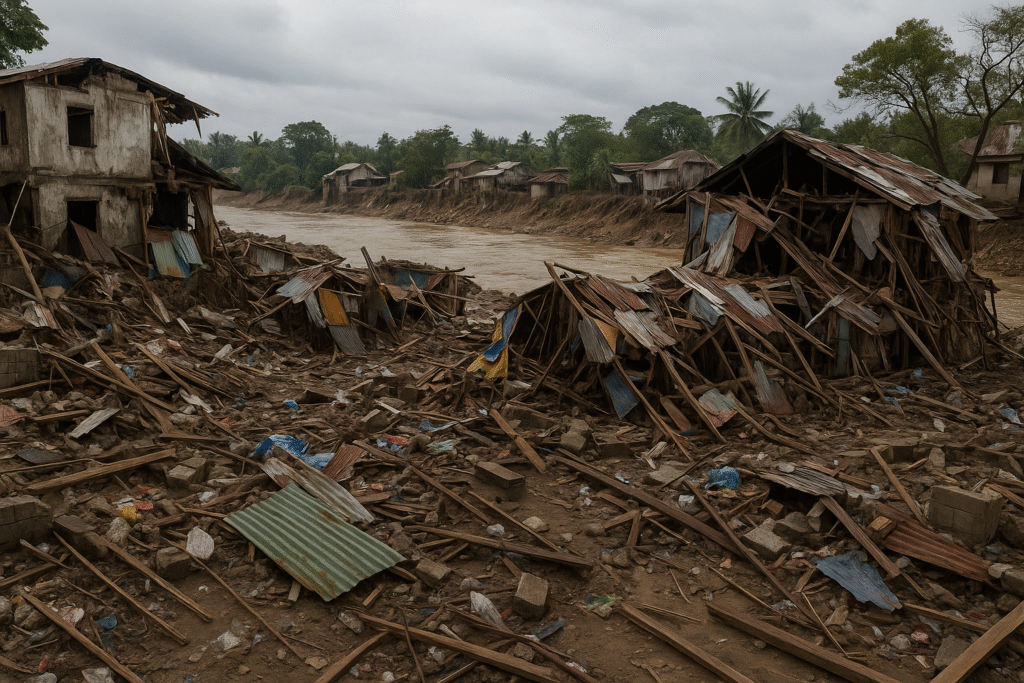
Scenes of devastation are widespread. In Cebu, floodwaters have receded to reveal homes reduced to rubble, overturned vehicles, streets clogged with debris, and communities struggling to rebuild. The storm, the 20th to hit the Philippines this year, follows closely on the heels of a magnitude 6.9 earthquake in northern Cebu, compounding the suffering of residents.
Human Toll and Community Impact
In Cebu City, 58-year-old Marlon Enriquez sifted through the mud-covered remains of his home, trying to salvage whatever possessions he could.
“This was the first time that has happened to us. I’ve been living here for almost 16 years and it was the first time I’ve experienced flooding like this,” he said.
For others, there was no home to return to. In Talisay, 38-year-old Eilene Oken found her neighborhood completely destroyed.
“We worked and saved for this for years, then in an instant, it was all gone,” Oken said, her voice breaking. “But I am grateful my family, including my two daughters, were unharmed.”
Among the fatalities were six military personnel whose helicopter crashed in Agusan del Sur on Mindanao during a humanitarian mission. Additionally, 17 people have been reported injured, and authorities continue to search for the missing.
Evacuations and Infrastructure Damage
Kalmaegi caused widespread flooding, power outages, and forced more than 200,000 people to evacuate across the Visayas region, including parts of southern Luzon and northern Mindanao. Streets remain submerged or coated in mud, hampering recovery efforts. Vehicles, homes, and public infrastructure were damaged, adding to the already monumental challenge of rebuilding after the recent earthquake.
Officials are warning residents to exercise caution as floodwaters recede, as debris and contaminated water continue to pose health and safety risks. Emergency shelters are housing displaced families, while relief organizations and local authorities coordinate rescue, medical aid, and food distribution.
International Concerns
Typhoon Kalmaegi is expected to strengthen over the South China Sea and is projected to make landfall in Vietnam by Friday. China has issued warnings for a “catastrophic wave process” and activated maritime disaster emergency responses in its southernmost province of Hainan. State broadcaster CCTV reported that China claims certain islands in the South China Sea, including the Spratly and Paracel Islands, as administered by Hainan authorities, heightening the region’s preparedness measures.
The typhoon comes on the heels of another severe storm, Super Typhoon Ragasa, which struck the northern Philippines in September, forcing school and government closures due to torrential rain and strong winds.
Recovery Efforts Underway
Local authorities in Cebu and Talisay have begun clearing mud from homes and streets. Volunteers and community groups are aiding families in salvaging belongings and assessing structural damage.
Governor Gwendolyn Garcia of Cebu urged residents to remain vigilant amid continued flooding risk and announced that relief funds and resources would be mobilized to assist affected communities.
“Our immediate priority is to ensure that families have access to food, clean water, and safe shelter,” Garcia said.
Relief agencies have dispatched emergency teams to support medical care, provide temporary housing, and restore essential services. Meanwhile, cleanup crews are working to clear roads, repair infrastructure, and restore electricity to areas hit hardest by the storm.
Broader Impact
Kalmaegi’s impact extends beyond human lives. Agriculture, transportation, and local businesses have suffered substantial damage, with crops washed away and commercial properties inundated. Economists warn that the typhoon could affect regional supply chains and increase the cost of goods in affected areas.
Environmental experts have also highlighted the compounded risk for central Philippines, noting that repeated natural disasters, including earthquakes and typhoons, exacerbate soil erosion, flooding, and long-term vulnerability of communities.
Looking Ahead
Meteorologists continue to monitor Typhoon Kalmaegi as it moves toward Vietnam. The Philippines remains on high alert for potential secondary storms, while emergency teams focus on search and rescue, medical assistance, and shelter for displaced residents.
“Recovery will be a long and challenging process,” said Jose Rizal, a local official in Cebu City. “But the resilience of our communities and the support from national and international agencies give us hope.”
Authorities urge residents to remain cautious, especially near riverbanks and flood-prone areas, as waters slowly recede and debris continues to obstruct streets.