By Harshit, WASHINGTON, October 31, 2025 4:35 AM EDT
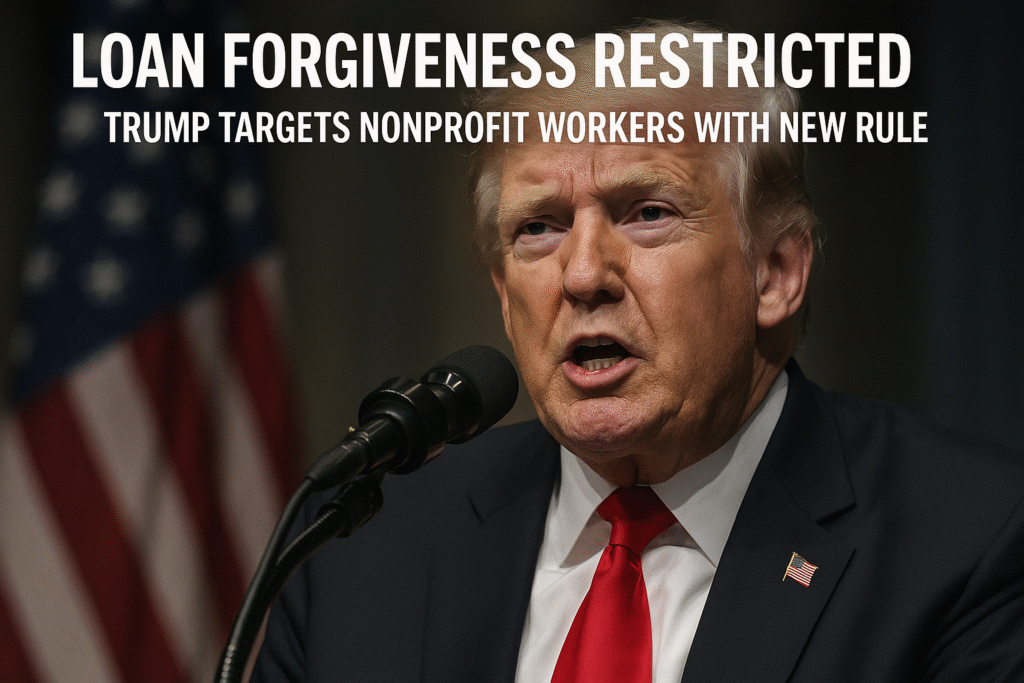
The U.S. Department of Education has finalized new regulations that could prevent certain nonprofit organizations — particularly those accused of operating with a “substantial illegal purpose” — from participating in the Public Service Loan Forgiveness (PSLF) program. The final rules, published Thursday, are set to take effect in July 2026 and are already drawing sharp criticism from civil rights and immigration advocates.
The policy grants the education secretary broad discretion to bar groups that allegedly engage in activities such as “chemical castration” of minors — a politically charged reference to gender-affirming medical care — or those accused of “harboring illegal immigrants” or maintaining ties to “terrorist organizations.”
Officials under President Donald Trump insist the measure is designed to safeguard taxpayer funds and prevent misuse of the loan forgiveness system. But advocacy organizations and policy experts argue that the language and intent of the rules disproportionately target liberal-leaning nonprofits and could deter graduates from entering public service fields.
A Program with Broad Reach
The Public Service Loan Forgiveness program was created by Congress in 2007 to encourage graduates to work in public service by forgiving remaining federal student loans after ten years of qualifying payments. Eligible participants include government employees and workers at nonprofit organizations, such as teachers, healthcare professionals, firefighters, lawyers, and social workers.
Since its creation, PSLF has served as a key incentive for skilled workers to join underfunded community organizations or social advocacy groups that offer lower pay than the private sector. Under the Trump administration’s revised rules, however, some of those organizations could lose eligibility entirely.
Education Undersecretary Nicholas Kent defended the move in a statement Thursday, calling the update “a necessary bulwark to protect taxpayer resources.”
“The program was meant to support Americans who dedicate their careers to public service — not to subsidize organizations that violate the law, whether by harboring illegal immigrants or performing prohibited medical procedures that attempt to transition children away from their biological sex,” Kent said.
Widespread Backlash from Advocacy Groups
Nonprofit leaders and civil liberties advocates swiftly condemned the new policy, calling it an attempt to politicize a neutral public service program.
Michael Lukens, executive director of the Amica Center for Immigrant Rights, said the rules “weaponize loan forgiveness” and would push many young lawyers and social workers out of the nonprofit sector.
“Our staff handle deportation cases, asylum petitions, and humanitarian protection work — all of which depend on the stability PSLF offers,” Lukens told the Associated Press. “If the administration removes that support, we’ll see a talent drain. People will leave public service for higher-paying private jobs.”
Organizations representing nonprofit employers have also expressed concern over the education secretary’s expanded discretion. The new rule allows the secretary to disqualify employers based on a “preponderance of the evidence” rather than a formal legal finding.
The National Council of Nonprofits warned that the policy could open the door to ideological abuse. “It allows any administration, regardless of party, to shape eligibility based on their own political priorities,” the group said in a statement Thursday.
Political Context and Criticism
The rule change comes amid the Trump administration’s broader effort to reshape federal funding and oversight of educational and nonprofit institutions. In recent months, the president has accused several progressive advocacy organizations of functioning as “domestic terror networks” and has pledged to ensure that taxpayer money “does not fund radical activism.”
Critics say Thursday’s regulation follows that pattern. Legal analysts point out that the definition of “substantial illegal purpose” is ambiguous and could be interpreted to target organizations engaged in lawful activities that conflict with administration policies, such as immigration advocacy or gender-affirming medical services.
Civil liberties lawyers are already preparing potential challenges, arguing that the rule may violate constitutional protections related to viewpoint discrimination and due process.
What Happens Next
The Education Department said the finalized rules will take effect in July 2026, giving organizations time to appeal their eligibility status or adjust operations to comply. However, advocacy groups expect prolonged litigation before that date.
In the meantime, tens of thousands of nonprofit employees remain uncertain whether their years of public service payments will still count toward loan forgiveness.
For many, the stakes are personal and immediate. “The younger generation, I hope, will be able to wait this out,” Lukens said. “But if it doesn’t get better, a lot of people will leave the field.”
As of 2025, roughly 1.6 million borrowers were enrolled in PSLF or related forgiveness plans. The new rule could affect a significant portion of those participants if their employers lose certification.
For now, the Department of Education maintains that its intent is purely administrative, not political. But opponents argue that its impact could reshape the public service landscape, undermining programs designed to attract skilled professionals to critical community roles.