
By Harshit, Washington, D.C., October 25, 2025
CPI Shows Inflation Below Expectations
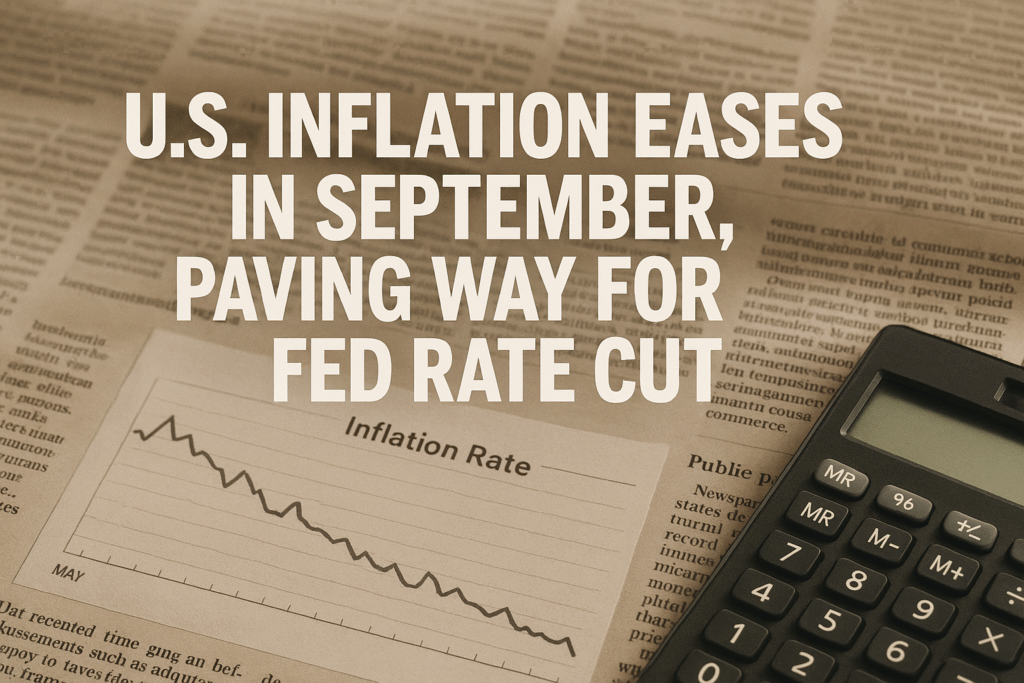
The U.S. consumer price index (CPI) rose 0.3% in September, pushing the annual inflation rate to 3%, slightly below economists’ forecasts of 0.4% monthly and 3.1% yearly increases. Excluding volatile food and energy prices, core CPI advanced 0.2% month-over-month and also 3% annually, lower than the predicted 0.3% monthly and 3.1% yearly gains.
The report, released by the Bureau of Labor Statistics (BLS), was one of the few economic data points published during the federal government shutdown, specifically because the Social Security Administration uses it to calculate cost-of-living adjustments (COLAs) for benefit checks.
“This CPI report offered investors a rare glimpse into the economy during the shutdown,” said John Kerschner, global head of securitized products at Janus Henderson. “Inflation came in softer than expected, prompting a modest bond market rally and reinforcing expectations for a Fed rate cut next week.”
Key Drivers of Inflation
- Energy: Gasoline prices rose 4.1% in September, while electricity increased 5.1% and natural gas surged 11.7% over the past year. However, gasoline prices were down 0.5% year-over-year.
- Food: Prices increased 0.2% in September, with meat, poultry, fish, and eggs up 5.2% and nonalcoholic beverages rising 5.3% annually.
- Shelter: Costs rose 0.2% month-over-month, 3.6% year-over-year, representing about one-third of the CPI basket.
- Goods & Services: New vehicles increased 0.8%, while used cars and trucks fell 0.4%. Durable goods prices were up 0.3%, and tariff-sensitive apparel rose 0.7%.
Analysts noted that despite recent Trump administration tariffs, their impact on consumer prices has been limited so far, as companies have shifted sourcing to countries with lower tariffs. James Knightley, chief international economist at ING, highlighted that the “realized” tariff rate currently stands at 10%, suggesting minimal pass-through to inflation.
Market and Fed Implications
Financial markets reacted positively, with stock futures rising and Treasury yields dipping slightly after the report. The soft inflation reading strengthens expectations that the Federal Reserve will cut its benchmark overnight borrowing rate by 0.25 percentage points from the current 4%-4.25% range at its upcoming Open Market Committee meeting.
“This report will clearly keep the Fed on track to cut rates,” said Art Hogan, chief market strategist at B. Riley Wealth. Markets are now pricing in another potential cut in December, although the longer-term path for interest rates remains uncertain.
Fed policymakers continue to balance inflation risks against signs of softening labor market conditions, while President Trump has pushed for more aggressive rate cuts, claiming inflation is no longer a concern.
Looking Ahead
The September CPI release provides the last major data point before the Fed’s October meeting, offering insight into inflation trends despite the ongoing government shutdown. With inflation slightly below expectations, the Fed has room to ease monetary policy while monitoring tariffs, wage growth, and employment data for future guidance.