
By Harshit, TUESDAY, Oct. 23, 2025 2 AM EDT
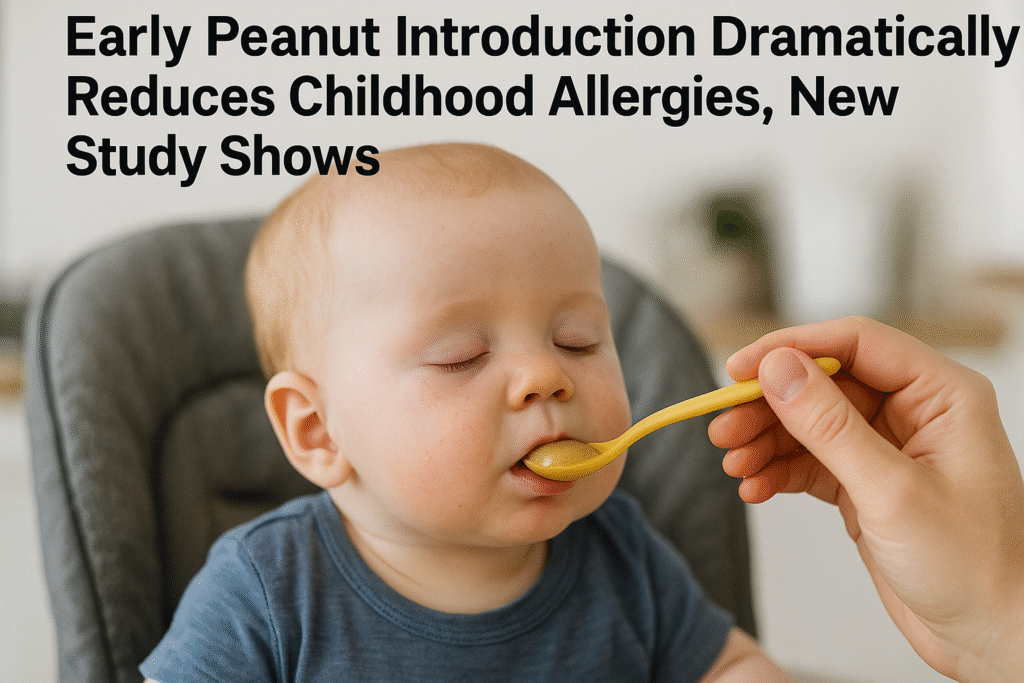
A decade after landmark research demonstrated that introducing peanuts to infants could prevent life-threatening allergies, new real-world evidence suggests the approach is making a measurable difference. Rates of peanut allergies among young children in the U.S. have declined sharply, marking a major success for public health guidance that encourages early exposure to this common allergen.
Peanut Allergies Declining in Young Children
According to a study published Monday in the journal Pediatrics, peanut allergies in children aged 0 to 3 fell by more than 27% following the initial 2015 guidance for high-risk infants. The decline accelerated to over 40% after 2017 recommendations expanded early peanut introduction to a broader population of infants.
“This is a remarkable outcome,” said Dr. David Hill, an allergist and researcher at Children’s Hospital of Philadelphia, who led the study. “We can now say that fewer children are developing food allergies today than would have been the case if these public health recommendations had not been implemented.”
Based on electronic health records from dozens of pediatric practices, Hill and his team estimate that about 40,000 children avoided developing peanut allergies thanks to early introduction strategies. While peanut allergies still affect roughly 2% of children, this reduction represents a significant improvement for pediatric health nationwide.
The Science Behind Early Introduction
For decades, pediatricians recommended delaying peanut consumption and other allergenic foods until age three, believing that avoidance would reduce allergy risk. That approach changed dramatically with the 2015 LEAP (Learning Early About Peanut Allergy) trial, led by Gideon Lack at King’s College London.
The study revealed that infants introduced to peanut products as early as four months old experienced an 80% reduction in the risk of developing peanut allergies, with protection persisting into adolescence for about 70% of participants. This groundbreaking trial prompted a reevaluation of traditional feeding guidelines and reshaped pediatric nutrition practices worldwide.
“The LEAP study fundamentally changed how we think about infant nutrition and allergy prevention,” said Hill.
The latest guidance, updated in 2021, recommends introducing peanuts and other major allergens between four and six months of age, ideally without prior screening or testing unless advised by a pediatrician. Small, safe exposures — such as a smear of peanut butter, peanut-containing yogurt, or nut butters — allow the immune system to learn to tolerate these foods.
Challenges to Implementation
Despite compelling evidence, uptake of early peanut introduction has been uneven. Surveys found that only 29% of pediatricians and 65% of allergists reported adhering to the expanded 2017 guidance. Confusion over best practices and concerns about safely introducing allergens outside controlled clinical settings contributed to slow adoption.
Dr. Ruchi Gupta, a child allergy expert at Northwestern University, noted that “initial uncertainty among both medical providers and parents delayed wider implementation, even after the science was clear.”
Nevertheless, the new study provides evidence that early allergen introduction is increasingly being adopted, and that it is producing tangible reductions in peanut allergy prevalence across the U.S.
Parental Experiences and Advocacy
Parents and health organizations have welcomed the findings. Sung Poblete, CEO of Food Allergy Research & Education (FARE), emphasized that the results “underscore a meaningful opportunity to reduce peanut allergies nationwide.”
Tiffany Leon, a registered dietician in Maryland and FARE director, introduced peanuts and other allergens early to her sons, James, 4, and Cameron, 2. Initially, her own mother was surprised by the advice to feed infants peanut-containing foods before age three. But Leon followed the evidence-based guidance, noting that her sons have not developed any allergies.
Hill advised parents to consult their pediatricians if they have concerns but stressed that even small, regular exposures are sufficient. “It doesn’t have to be a lot of food, but consistent exposure helps train the immune system safely,” he said.
Implications for Public Health
The study highlights the power of translating research into practice. What began as a carefully controlled clinical trial has now impacted thousands of children in real-world settings, proving that public health recommendations can be both practical and life-saving.
“This research reinforces the importance of science-based guidance in pediatric nutrition,” Hill said. “As more families adopt early peanut introduction, we can expect the prevalence of peanut allergies to continue falling, potentially preventing tens of thousands of future cases.”
By demonstrating that early allergen introduction is feasible outside clinical trials and effective in preventing serious food allergies, the study provides hope for families, clinicians, and public health advocates.