
By Harshit | October 22, 2025 | San Francisco | 2:00 AM PDT
OpenAI Enters the Browser Wars
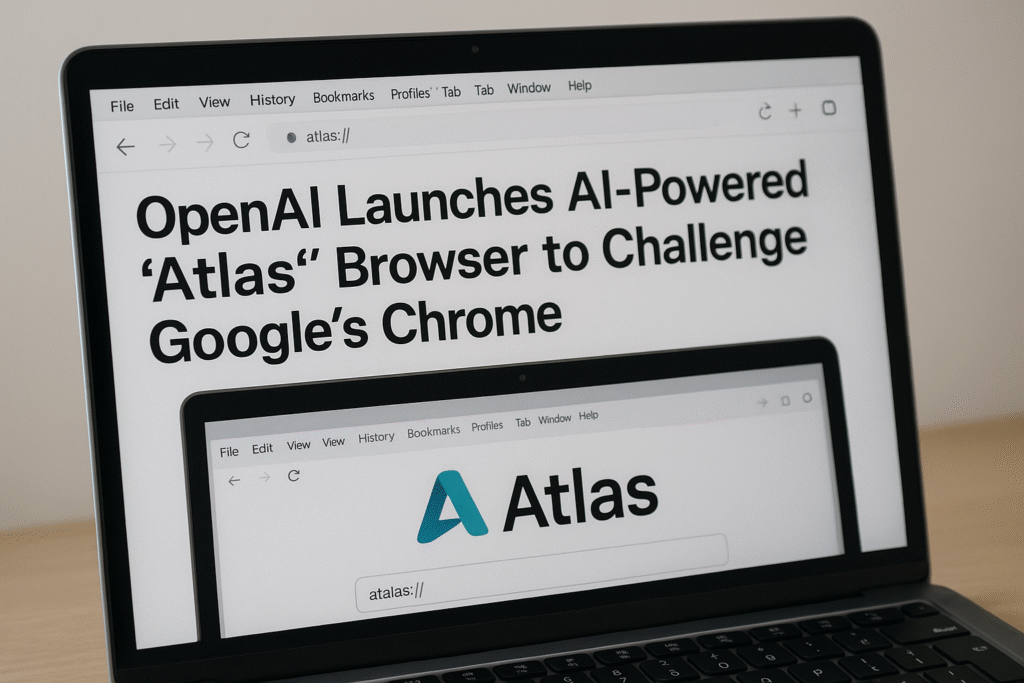
ChatGPT-maker OpenAI has unveiled a new artificial intelligence-powered web browser, ChatGPT Atlas, aiming to redefine how users interact with the internet and challenge entrenched competitors like Google Chrome and Microsoft Edge.
Launched on Tuesday for Apple’s macOS, Atlas eliminates one of the defining features of traditional browsers — the address bar — instead offering an AI-centric interface powered directly by ChatGPT.
OpenAI CEO Sam Altman described the innovation as “built around ChatGPT,” signaling the company’s shift toward integrating conversational AI as the primary interface for search, discovery, and browsing. The company emphasized that the move reflects its mission to make the AI assistant the center of daily digital life.
AI at the Core of Browsing
Unlike conventional browsers that rely on users typing URLs or search queries, Atlas uses natural language interaction. Users can simply ask ChatGPT to find or summarize web content, navigate between sources, or even perform actions online — effectively blending the capabilities of a browser and a virtual assistant.
A standout feature, Agent Mode, allows Atlas to conduct searches and perform browsing tasks autonomously. For example, it can book a hotel, research products, or summarize long documents without user micromanagement. However, this mode will be exclusive to ChatGPT Plus and enterprise subscribers, offering advanced capabilities such as contextual awareness and faster page comprehension.
OpenAI stated that the agent leverages “browsing context” to improve performance, learning user preferences over time to refine responses and automate repetitive web activities.
Monetization and Strategic Partnerships
The launch of Atlas marks OpenAI’s latest attempt to monetize its expanding AI ecosystem. The company has already formed partnerships with major platforms like Etsy, Shopify, Expedia, and Booking.com, allowing seamless integration for shopping and travel booking within the browser environment.
This strategy reflects OpenAI’s ongoing pivot toward a multi-service AI platform — combining conversational interfaces, autonomous search, and productivity tools — designed to keep users within its ecosystem.
The company’s internal data indicates that ChatGPT has now surpassed 800 million weekly active users, doubling from 400 million in February 2025, according to analytics firm DemandSage. This meteoric growth has emboldened OpenAI to expand its product portfolio beyond chat-based interaction into a full web experience.
Experts React to Atlas Launch
Industry analysts have been cautiously optimistic. Pat Moorhead, CEO and chief analyst at Moor Insights & Strategy, believes early adopters will be eager to “kick the tires” on OpenAI’s new browser. However, he expressed skepticism about its mass-market adoption.
“I’m doubtful Atlas will pose a serious challenge to Chrome or Edge,” Moorhead noted. “Most mainstream and corporate users will likely wait for their preferred browsers to integrate similar AI capabilities.”
Microsoft Edge, which already integrates ChatGPT through its partnership with OpenAI, currently provides comparable functionality, offering AI-assisted search and webpage summarization.
A New Chapter in the Search Monopoly Battle
OpenAI’s browser debut comes at a pivotal moment. Just a year ago, a U.S. court ruled Google an illegal monopolist in online search, intensifying scrutiny of its dominance. Although the Justice Department had requested that Google be forced to spin off its Chrome browser, the court declined to impose that remedy.
Atlas’s entry introduces fresh competition in a sector long criticized for its lack of diversity. With AI-driven interfaces reshaping how information is retrieved, OpenAI’s move could accelerate the transformation of search from keyword-based queries to conversational exploration.
The Broader AI Search Shift
The research firm Datos reported that as of July 2025, 5.99% of all desktop searches were performed through large language models (LLMs) like ChatGPT — more than double the rate from the previous year. This shift highlights a growing user preference for AI-generated answers and recommendations over traditional link-based search results.
Meanwhile, Google continues to evolve its own products, embedding generative AI deeply into Search and Chrome. Over the past year, Google’s Search Generative Experience (SGE) has prioritized AI-driven summaries at the top of results pages, signaling that even incumbents recognize the changing landscape.
OpenAI’s Atlas, however, takes a bolder stance — removing the search bar altogether and trusting AI to handle every aspect of navigation and information retrieval. Whether users will embrace this fully conversational browsing experience remains to be seen, but the launch represents one of the most significant challenges to Google’s web dominance in over a decade.
Conclusion: A Paradigm Shift or a Niche Tool?
While analysts debate its potential impact, one thing is clear: OpenAI is betting that the future of the web belongs not to search boxes and tabs, but to AI-driven agents capable of understanding intent and acting on it.
Atlas may not immediately dethrone Chrome, but it signals a paradigm shift in how people will explore, consume, and interact with information online — an early look at a post-search era where AI is the browser itself.