
By Harshit, London, UK | October 21, 2025
European Markets Maintain Momentum
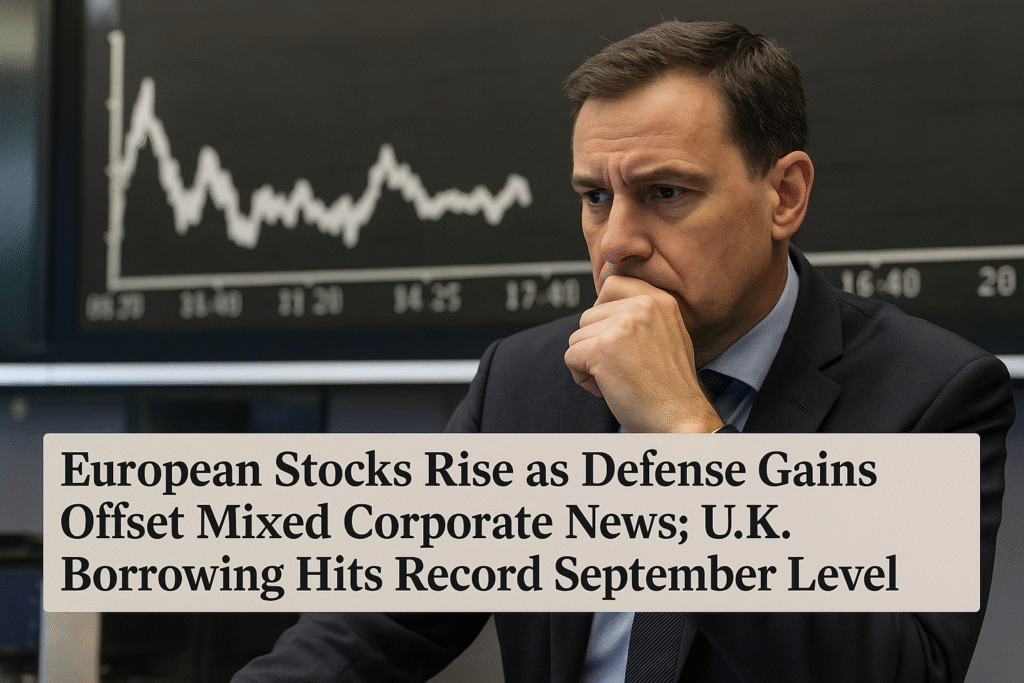
European stocks extended gains on Tuesday, building on positive momentum from the start of the week. The pan-European Stoxx 600 index was up 0.2% by early afternoon in London (8:31 a.m. ET), with the FTSE 100 rising 0.3% and the CAC 40 climbing 0.5%. Italy’s FTSE MIB added 1%, while Germany’s DAX erased earlier losses to finish 0.26% higher. Spain’s IBEX 35 gained 0.17% to 15,855.10.
The broader European market was supported by continued strength in defense stocks, which had led Monday’s rally. The Stoxx Europe Aerospace and Defense index was trading 1% higher by early afternoon, recovering from earlier losses. Switzerland’s Montana Aerospace surged 13%, Germany’s Renk added 0.4%, and Italian defense firm Leonardo rose 0.8%.
Market participants attributed the sector’s resilience to a combination of factors, including the market debut of TKMS, the warship division spun off from Thyssenkrupp, and ongoing geopolitical tensions. A weekend meeting between U.S. President Donald Trump and Ukrainian President Volodymyr Zelenskyy over Ukrainian territory appeared to underscore the importance of defense-related investments, while broader instability in the Middle East kept investor focus on defense equities.
Corporate News Weighs on Select Stocks
Corporate developments produced mixed results across European equities. Danish pharmaceutical giant Novo Nordisk slipped 1% following the announcement of an Extraordinary General Meeting (EGM) on November 14 to elect new members to its Board of Directors.
The meeting stems from a dispute between current board members and the company’s controlling shareholder, the Novo Nordisk Foundation. Chairman Helge Lund confirmed that he and several independent directors would not stand for reelection at the upcoming EGM. “Following dialogue with the Novo Nordisk Foundation regarding the future composition of the Board of Directors, it has not been possible to reach a common understanding,” Lund said in a statement.
Investors reacted cautiously, highlighting that board disputes at major pharmaceutical companies can signal uncertainty over strategic direction and corporate governance.
U.K. Borrowing Surges in September
In the United Kingdom, official data revealed that public sector borrowing reached £20.2 billion ($27 billion) in September, marking the highest September borrowing level since records began in 1997. Public borrowing for the first half of the financial year rose to £99.8 billion, up 13% compared to the same period last year, making it the second-highest April-to-September total on record.
Despite the headline figure, borrowing came in line with forecasts from the Office for Budget Responsibility (OBR) made in March. Analysts highlighted that while the numbers are consistent with expectations, they indicate persistent fiscal pressures as government expenditures continue to outpace revenues.
Thomas Pugh, chief economist at consulting firm RSM UK, noted that the data offered a “little bit of good news” for Chancellor Rachel Reeves, whose upcoming Autumn Budget is expected to include measures to curb spending and reduce public debt. “Looking ahead to the budget in the autumn, we are pencilling in tax increases of around £30 billion,” Pugh said.
Bond Market Response
Yields on U.K. government bonds (gilts) remained largely unchanged across most maturities on Tuesday, with the exception of longer-term 30-year gilts, which declined 2 basis points to trade at 5.293%. The U.K. continues to carry the highest long-term borrowing costs among G-7 nations, highlighting the market’s sensitivity to government debt dynamics amid high borrowing levels.
Market observers suggested that the combination of rising borrowing and ongoing geopolitical uncertainty across Europe will likely keep investors focused on defensive sectors such as aerospace and defense, while monitoring corporate earnings and government fiscal strategies for further cues.
Looking Ahead
Investors will continue to track developments in European defense stocks, corporate governance disputes, and macroeconomic data, including upcoming U.K. budget announcements. European markets are expected to remain influenced by geopolitical events, corporate earnings reports, and shifts in investor sentiment tied to fiscal and monetary policy signals.
Meanwhile, broader market participants are evaluating geopolitical risks, inflation pressures, and government debt trends, which may impact European equities, bond yields, and currency movements in the coming weeks.